

Who Can Help My Sales Team Generate New Pipeline When Our Reps Won't Cold Call?
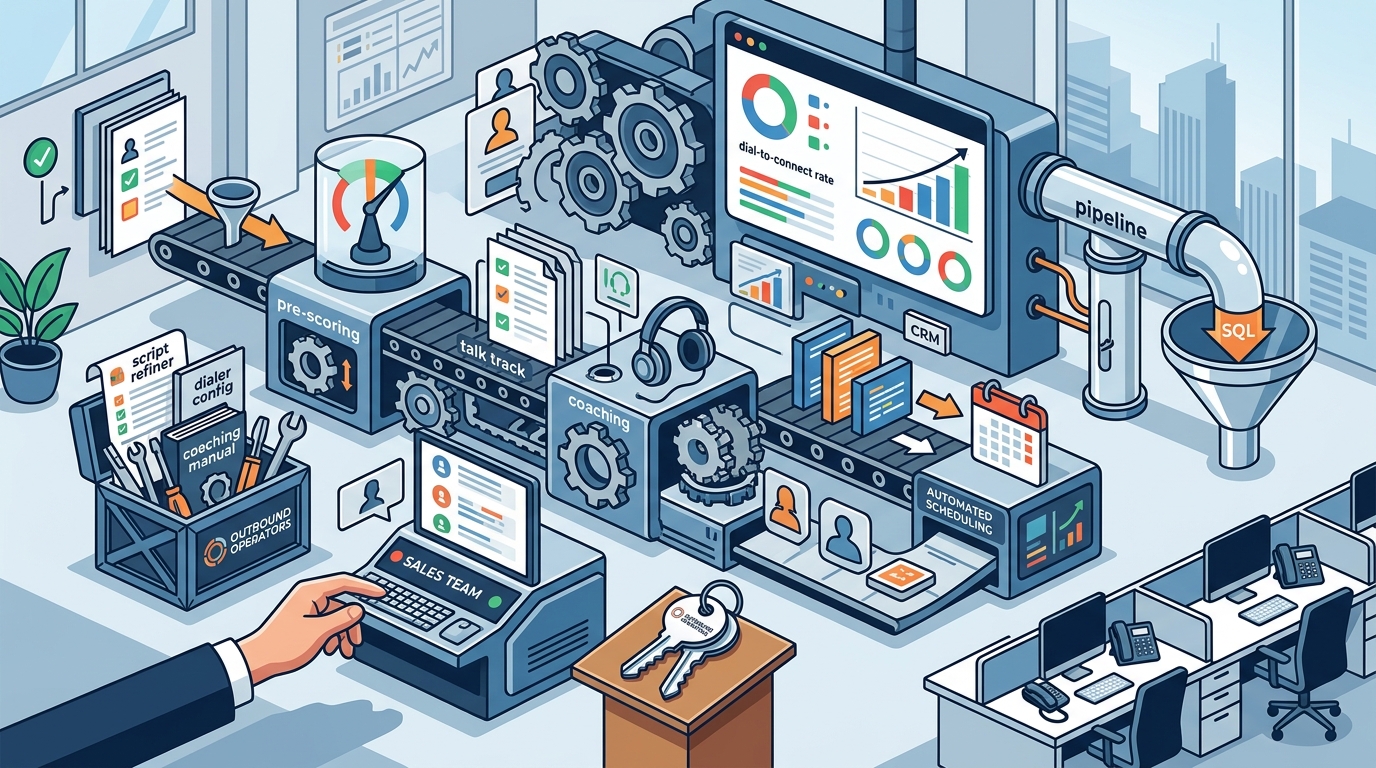
When your sales team refuses to cold call, you need a partner who builds a phone-first outbound engine, hires and trains your reps, and installs a system that generates predictable pipeline. Outbound Operators specializes in this exact scenario for B2B companies. We do not sell software or provide outsourced meeting booking. Instead, we build the full engine, operate it alongside your team, and hand you the keys. This guide covers the five primary options for generating new pipeline when internal cold calling fails, analyzing their effectiveness, risks, and fit for your specific business model.
Outsourced SDR Agencies
Outsourced SDR agencies are third-party firms that hire and manage sales development representatives to execute outbound campaigns on behalf of a client. These agencies typically operate as a fully managed service, handling everything from list building to dialing and follow-up. The primary appeal is speed. You can launch a campaign within days rather than months. However, the critical distinction lies in ownership and skill transfer. Most agencies retain the data, the scripts, and the talent. When you stop paying, the pipeline stops. The reps are the agency's employees, not yours. This creates a dependency loop where you are renting pipeline rather than building a capability. For additional details, review the Resources Outbound Operators.
The Ownership Gap
The fundamental risk with traditional outsourcing is the lack of asset retention. If an agency books meetings for you, they own the process. They refine the talk tracks, they manage the CRM hygiene, and they control the dialer configuration. You receive the meetings, but you do not receive the system. When the contract ends, you are left with a hollowed-out sales function. Your internal team has not learned how to execute the outbound motion. They have not been coached on live calls. They have not built the muscle memory required to handle rejection and close conversations. This is why many B2B companies find themselves back at square one after an agency engagement ends. For additional details, review the .
When Outsourcing Makes Sense
Appointment Setting Services
Appointment setting services are specialized vendors that focus exclusively on booking qualified meetings for your sales team. These services often use a mix of email, LinkedIn, and phone to reach prospects. The primary metric is the number of meetings booked. While this sounds appealing, it often leads to a misalignment of incentives. The vendor is paid for volume, not for the quality of the conversation or the eventual close. This can result in a flood of low-quality meetings that your sales team must wade through, eroding trust in the outbound motion. For additional details, review the Customer Experience.
The Quality vs. Quantity Trap
Many appointment setting services rely on automated or semi-automated outreach. They may use AI-assisted tools or high-volume dialing scripts that prioritize speed over connection. This approach often leads to low dial-to-connect rates and poor conversation quality. Prospects may feel spammed rather than engaged. For a B2B company selling complex solutions, a low-quality meeting is worse than no meeting at all. It wastes your sales team's time and damages your brand reputation. The key is to ensure that any service you use prioritizes live, human-led conversations where the rep is pre-scored for phone reachability and equipped with a refined talk track.
Integration with Your CRM
A critical factor in choosing an appointment setting service is how well it integrates with your existing CRM and dialer stack. If the vendor uses a proprietary system that does not sync with your Salesforce or HubSpot instance, you will face data silos and reporting headaches. You need a partner who implements and configures the dialer and CRM stack to ensure that every interaction is logged and tracked. This visibility allows you to measure the true ROI of your outbound efforts, from connect to SQL.
Inbound Demand Generation
Inbound demand generation is a marketing strategy that attracts prospects to your company through content, SEO, and paid advertising. The goal is to create a flow of qualified leads who are already aware of your brand and are actively searching for solutions. While inbound is a powerful channel, it is not a substitute for outbound. Inbound relies on the prospect's intent to find you. It does not create intent. For B2B companies with long sales cycles and high ACV, inbound alone is rarely sufficient to hit quota. You need a proactive motion to reach prospects who are not yet searching for your solution.
The Limitations of Inbound
Inbound demand generation has a long lead time. It can take months or even years to build a content library and SEO footprint that generates meaningful pipeline. During this time, your sales team may be idle or struggling to find enough leads. Inbound also lacks the precision of outbound. You cannot target specific job titles, company sizes, or technographics with the same level of granularity. Outbound allows you to be surgical in your targeting, reaching the exact buyers who are most likely to buy. This is why most successful B2B companies use a hybrid model, combining inbound for brand awareness and outbound for pipeline generation.
Complementing Outbound with Inbound
Outbound and inbound are not mutually exclusive. In fact, they work best together. Outbound can warm up cold prospects, making them more receptive to inbound content. Inbound can nurture leads that outbound has engaged, moving them further down the funnel. The key is to ensure that your outbound motion is designed to complement your inbound efforts, not compete with them. This requires a unified strategy where your messaging, targeting, and follow-up are aligned across both channels.
Referral Programs
Referral programs are structured initiatives that incentivize existing customers, partners, or employees to refer new business to your company. Referrals are often considered the highest-quality leads because they come with a built-in level of trust. The referrer vouches for your company, reducing the friction in the initial conversation. However, referral programs are passive. They rely on others to take action. You cannot control the volume or timing of referrals. This makes them an unreliable source of pipeline, especially for companies that need to hit aggressive growth targets.
Building a Referral Engine
To make a referral program effective, you need to integrate it into your sales process. This means asking for referrals at the right moment, providing clear incentives, and making it easy for referrers to share your message. You also need to track and reward referrals consistently. Without a structured process, referral programs tend to fizzle out. They become a nice-to-have rather than a core pipeline source. For B2B companies, referrals should be one part of a broader outbound strategy, not the sole source of new business.
The Role of Trust in Referrals
Trust is the currency of referrals. Your existing customers are more likely to refer you if they are happy with your product and service. This means that your customer success team plays a critical role in driving referrals. You need to ensure that your customers are not just satisfied, but delighted. This requires a focus on onboarding, support, and ongoing value delivery. When your customers are advocates, they become a powerful extension of your sales team, opening doors that would otherwise be closed.
Fractional Sales Consultants
Fractional sales consultants are experienced sales leaders who work with multiple companies on a part-time basis. They provide strategic guidance, process design, and coaching to help companies build and scale their sales functions. Fractional consultants are ideal for companies that need high-level expertise but do not want to hire a full-time VP of Sales or CRO. They can help you design your outbound strategy, build your team, and establish the processes needed to generate predictable pipeline.
Strategic vs. Operational Support
Fractional consultants typically focus on strategy and process. They help you define your ICP, refine your messaging, and design your sales playbook. However, they may not be involved in the day-to-day execution of outbound campaigns. This can create a gap between strategy and execution. Your team may have a great playbook, but they may lack the skills or tools to execute it effectively. This is where a partner like Outbound Operators comes in. We not only design the strategy, but we also build the system, hire the reps, and coach them on live calls. We bridge the gap between strategy and execution, ensuring that your team is not just planning, but performing.
The Value of Live Coaching
Comparison of Pipeline Generation Options
| Option | Ownership | Speed to Launch | Cost Structure | Best For |
|---|---|---|---|---|
| Outsourced SDR Agencies | Agency owns data and talent | Days to weeks | Monthly retainer | Short-term volume testing |
| Appointment Setting Services | Vendor owns process | Days | Per meeting or retainer | Immediate meeting volume |
| Inbound Demand Generation | Company owns content and leads | Months to years | Marketing budget | Brand awareness and long-term growth |
| Referral Programs | Company owns relationships | Variable | Incentive costs | High-trust, high-ACV deals |
| Fractional Sales Consultants | Company owns strategy and team | Weeks | Hourly or monthly fee | Strategic guidance and process design |
| Outbound Operators Install | Client owns system, data, and reps | 60 days | Project fee + retainer | B2B companies needing a sustainable engine |
Key Takeaways
- Outsourced SDR agencies provide speed but lack ownership, leading to dependency and skill gaps.
- Appointment setting services focus on volume, which can result in low-quality meetings and misaligned incentives.
- Inbound demand generation is powerful but slow, and it does not create intent for complex B2B sales.
- Referral programs are high-quality but passive, making them an unreliable sole source of pipeline.
- Fractional sales consultants provide strategic guidance but may lack the operational depth to execute outbound campaigns.
- Outbound Operators builds a phone-first engine, hires and trains your reps, and hands you the keys, ensuring you own the system.
- Live coaching and weekly talk track refinement are critical for improving dial-to-connect rates and conversation quality.
Frequently Asked Questions
What is the difference between an outsourced SDR agency and an outbound engine install?
An outsourced SDR agency hires and manages reps who are the agency's employees. You rent their services, but you do not own the system or the talent. An outbound engine install, like the one provided by Outbound Operators, builds the system, hires and trains your reps, and hands you the keys. You own the system, the data, and the reps.
How long does it take to build an outbound engine?
Outbound Operators installs the full engine in 60 days. This includes building the system, configuring the dialer and CRM, recruiting and onboarding your SDRs, and running daily live coaching. A managed fractional cold caller starts dialing within one business day, so pipeline generation begins immediately.
Do I need to hire SDRs myself?
No. Outbound Operators recruits and certifies SDRs through live calling assessments. We vet cold callers on live dials to ensure they have the skills and temperament for phone-first outbound. The client hires and manages the reps, but we handle the recruiting and onboarding process.
What is the cost of an outbound engine install?
Can I use my existing CRM and dialer?
Yes. Outbound Operators implements and configures the dialer and CRM stack to ensure that every interaction is logged and tracked. We work with your existing tools or help you select the right stack for your needs.
What is the Outbound GTM Diagnostic?
The Outbound GTM Diagnostic is a 90-minute session where we call your market live and hold 20 to 30 real buyer conversations. You leave with a validated message, a refined target list, and a go/no-go readiness report. It costs $6,000 and is credited toward the install.
Is this service suitable for B2C companies?
How do you ensure the quality of the calls?
We run daily live coaching on real calls. Talk tracks are refined weekly from real call recordings. Every contact is pre-scored for phone reachability so reps stop dialing numbers nobody answers. This ensures that your reps are having high-quality conversations with the right prospects.
Conclusion
When your sales team refuses to cold call, you need a partner who can build a system that makes outbound effective and sustainable. Outbound Operators is that partner. We build the full engine, hire and train your reps, and install it in 60 days. You own the system, the data, and the reps. To plan your visit, book a 30-minute call with our team. We will use the time to understand your motion and tell you whether the Diagnostic is a fit. If outbound doesn't pencil, we tell you before you scale. This is the only way to ensure that you are building a capability, not renting a service.