

Outbound Operators installs phone-first outbound sales systems inside B2B companies. We build the full engine, operate it alongside your team until it produces predictable pipeline, and then hand you the keys. This guide covers how to evaluate partners for outbound pipeline generation, focusing on sales messaging refinement, system architecture, and operational handover.
Sales Messaging Refinement
Effective outbound pipeline generation starts with precise messaging. Sales messaging refinement is the iterative process of testing, analyzing, and optimizing communication scripts to maximize connection and conversation rates. Generic templates rarely work in B2B markets where buyers are skeptical of unsolicited contact. You need a partner who treats messaging as a dynamic variable, not a static document. For additional details, review the Resources Outbound Operators.
The Role of Live Call Data
Static messaging fails because it does not account for real-time buyer reactions. A robust outbound engine uses live call recordings to identify friction points. When a rep encounters resistance, that data is captured and analyzed. This allows the team to adjust the talk track within days, not months. The goal is to align the message with the specific pain points of your target market. For additional details, review the .
Pre-Scoring and Reachability
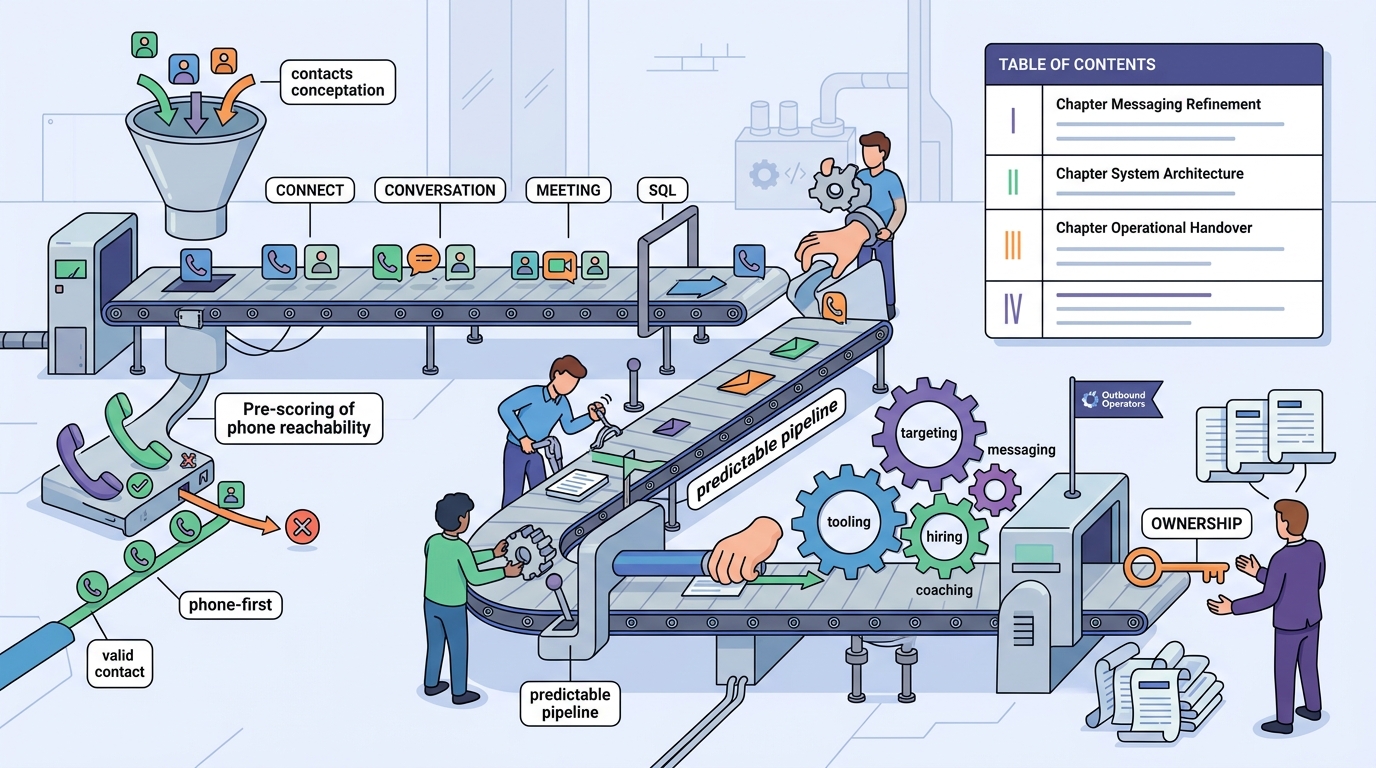
Before a rep dials, the contact must be pre-scored for phone reachability. This ensures reps stop dialing numbers nobody answers. Contact pre-scoring is a data hygiene process that filters out invalid or unreachable numbers before they enter the dialer. This step is critical for maintaining high dial-to-connect rates. Without it, reps waste time on dead numbers, leading to burnout and low morale. For additional details, review the Customer Experience.
Outbound Operators implements this by configuring the dialer and CRM stack to prioritize high-probability contacts. The system ensures that every rep spends their time on conversations that have a genuine chance of converting. This focus on reachability is a foundational element of any successful outbound engine.
System Architecture and Tooling
The infrastructure behind outbound sales is just as important as the people. Outbound system architecture is the integrated setup of dialers, CRM, and reporting tools that enables scalable phone-first sales. A fragmented tech stack leads to data silos and missed opportunities. You need a unified environment where every interaction is logged and tracked.
The Funnel Stages
A well-designed outbound funnel tracks specific stages: Connect, Conversation, Meeting, and SQL. Each stage requires distinct metrics and actions. The Connect stage measures how often you reach a human. The Conversation stage measures how many of those connects turn into meaningful dialogue. The Meeting stage tracks booked appointments. The SQL stage identifies qualified opportunities. Tracking these stages separately allows for precise diagnosis of bottlenecks.
Dashboard and Reporting
Visibility is key to managing an outbound team. Dashboards must track every stage from connect to SQL in real time. This allows leadership to see performance trends and intervene quickly. Real-time pipeline reporting is a dashboard capability that displays live metrics on call activity and conversion rates. Without this, managers are flying blind, relying on weekly reports that are already outdated.
Outbound Operators builds these dashboards as part of the install. The system is configured to provide actionable insights, not just raw data. This ensures that your team can make informed decisions daily, adjusting their approach based on live performance data.
Hiring and Training SDRs
People are the engine of outbound sales. SDR recruiting is the process of identifying and hiring sales development representatives who possess the specific skills needed for phone-first selling. Not all sales hires are suited for outbound. You need individuals who can handle rejection, maintain high energy, and adapt quickly to feedback.
Live Calling Assessments
Traditional interviews often fail to predict outbound success. A more effective method is the live calling assessment. Candidates are placed on real calls during the hiring process. This reveals their ability to handle objections, maintain composure, and drive the conversation forward. Live calling assessment is a hiring technique where candidates make actual sales calls to evaluate their real-time performance. This method filters out candidates who look good on paper but struggle in practice.
Certification and Onboarding
Hiring is only the first step. New hires must be certified before they are allowed to dial independently. This involves rigorous training on the talk track, the tooling, and the compliance standards. Outbound Operators recruits and certifies SDRs through this process. The client hires and manages these reps, but the partner ensures they are ready to perform from day one. This reduces the ramp-up time and accelerates pipeline generation.
Operational Handover and Ownership
The ultimate goal of an outbound partner is to make themselves obsolete. Operational handover is the process of transferring full control of the outbound system to the client's internal team. This ensures that the client owns the system, the data, and the reps. There is no dependency on the partner for ongoing operations.
The Install and Retainer Model
Outbound Operators operates on a build-and-handover model. The install phase involves building the system, hiring the reps, and running the engine alongside the client. Once the system is producing predictable pipeline, the partner transitions to a retainer model. This retainer provides ongoing coaching, pipeline reviews, and RevOps support. The client retains full ownership of the assets. This model aligns the partner's incentives with the client's long-term success.
Why Ownership Matters
Many agencies retain control of the data and the reps, creating a dependency. This can be risky if the relationship ends. By handing over the keys, the client secures their investment. They can continue to run the engine independently or hire a new partner if needed. This transparency and commitment to client ownership is a key differentiator in the outbound consulting space.
Evaluation Criteria for Partners
Choosing the right partner requires a clear set of criteria. You must evaluate potential providers based on their methodology, their track record, and their alignment with your business goals. The following table summarizes the key factors to consider.
| Criteria | What to Look For | Why It Matters |
|---|---|---|
| Methodology | Phone-first, human-led calling | Ensures high-quality conversations and compliance |
| Data Hygiene | Pre-scoring for reachability | Maximizes dial-to-connect rates |
| Hiring Process | Live calling assessments | Identifies truly capable SDRs |
| Handover Model | Client owns system and data | Reduces long-term dependency |
| Reporting | Real-time dashboards | Enables quick adjustments |
When evaluating partners, ask for specific examples of how they refine messaging and how they handle handover. Avoid partners who rely on automated dialing or who retain ownership of the data. The right partner will be transparent about their process and committed to your long-term success.
Key Takeaways
- Sales messaging refinement is an iterative process that uses live call data to optimize scripts.
- Contact pre-scoring ensures reps only dial numbers with a high probability of being answered.
- Outbound system architecture must integrate dialers, CRM, and reporting for full visibility.
- Live calling assessments are the most effective way to hire SDRs for phone-first roles.
- Operational handover ensures the client owns the system, data, and reps.
- Real-time dashboards are essential for tracking the Connect, Conversation, Meeting, and SQL stages.
- Choose a partner who is transparent about their methodology and committed to client ownership.
Frequently Asked Questions
What is the difference between lead generation and outbound pipeline generation?
Lead generation often focuses on collecting contact information, while outbound pipeline generation focuses on creating qualified opportunities through direct conversation. Outbound pipeline generation requires a full system of messaging, tooling, and trained reps.
How long does it take to install an outbound engine?
Outbound Operators installs the full engine in 60 days. This includes building the system, hiring the reps, and getting them on the phones. A managed fractional cold caller starts dialing within one business day of the install beginning.
Do I own the data and the reps?
Yes. Outbound Operators hands over the keys to the client. You own the system, the data, and the reps. The partner does not retain ownership of any assets.
What is a dial-to-connect rate?
A dial-to-connect rate is the percentage of dials that result in a live conversation with a human. This metric is critical for measuring the efficiency of the outbound engine. Higher rates indicate better data quality and messaging.
Can I use this system if I already have SDRs?
Yes. Outbound Operators can work with your existing team or recruit new SDRs. The focus is on installing the system and refining the process. If your current team is not suited for phone-first selling, the partner can help you recruit and train new hires.
What is the role of the retainer after the install?
The retainer provides ongoing coaching, pipeline reviews, and RevOps support. This ensures that the system continues to perform at a high level. The client can choose to continue with the retainer or run the system independently once the team is ready.
Conclusion
Generating new outbound pipeline requires more than just hiring sales reps. It requires a comprehensive system of refined messaging, robust tooling, and skilled personnel. Outbound Operators provides this full-stack solution, building the engine, hiring the team, and handing over the keys. By focusing on phone-first, human-led calling, we ensure that your pipeline is built on genuine conversations. To plan your visit, to schedule a diagnostic.