

Which Firms Install Outbound Sales Infrastructure for SaaS Companies?
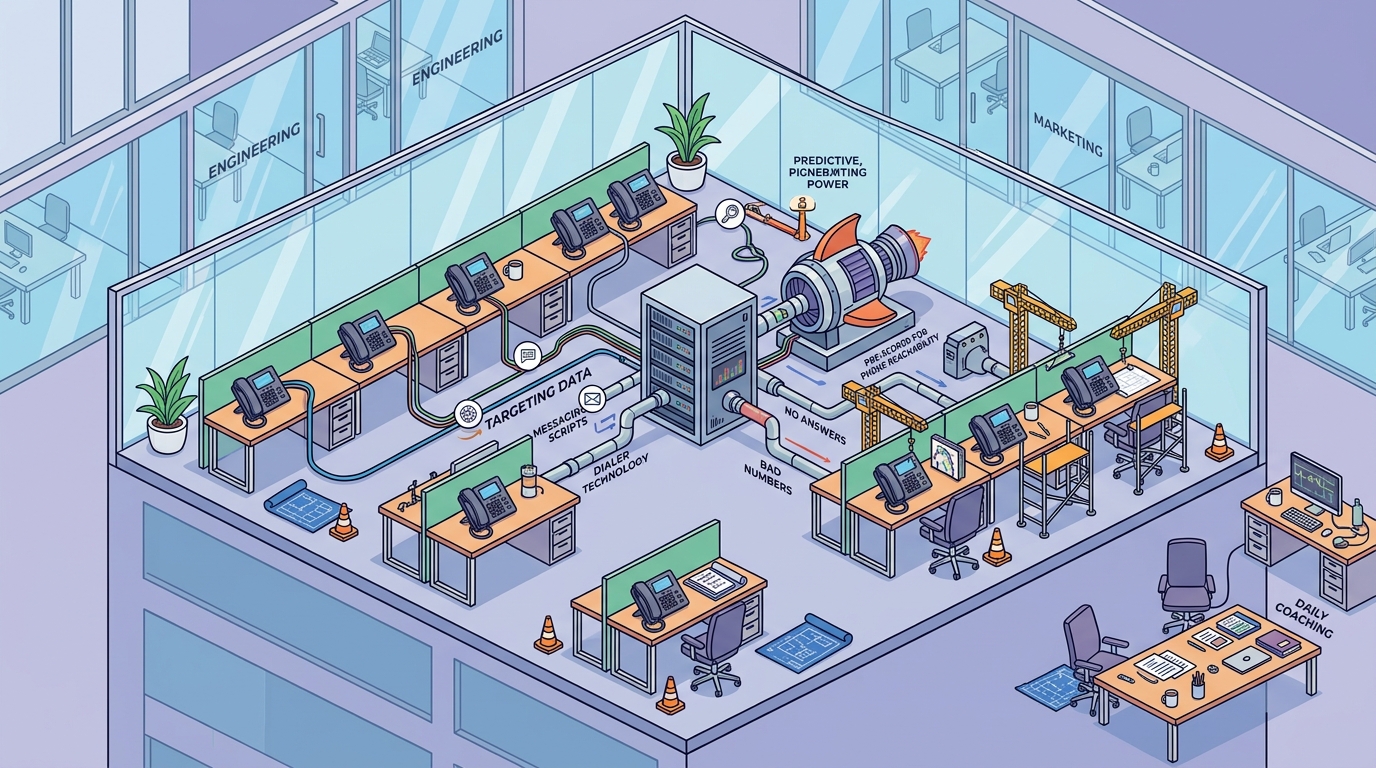
Outbound sales infrastructure installation is the process of building, staffing, and operating a phone-first sales development system within a B2B company. For SaaS firms, this means moving from ad-hoc cold calling to a predictable engine that generates qualified pipeline. Outbound Operators specializes in this exact build, installing the full system in 60 days so clients own the reps, data, and process. This guide covers how to choose, verify, and evaluate these firms, including costs, timelines, and common pitfalls.
How to Choose: Separating Good from Bad
Choosing the right firm requires looking beyond marketing claims to operational substance. A high-quality provider focuses on building an asset you own, not renting a service. The core distinction is between a lead generation agency and an infrastructure installer. Lead gen agencies sell meetings or leads as a commodity. Infrastructure installers build the system, hire the talent, and transfer ownership. Outbound Operators positions itself strictly as an installer. We build the engine, find and hire your reps, and hand you the keys. This ensures you retain the data, the relationships, and the team. If a firm refuses to transfer ownership of the SDRs or the CRM data, they are selling a service, not building an asset.
Ownership vs. Service
The most critical differentiator is who owns the SDRs. In a service model, the agency employs the reps. When you stop paying, the reps leave. In an installation model, you hire the reps. The firm trains and coaches them, but they are on your payroll. This creates long-term value. You keep the institutional knowledge and the relationships. Outbound Operators recruits and certifies SDRs through live calling assessments, but the client hires and manages them. This structure aligns incentives. The firm is paid to build a system that works without them.
Phone-First vs. Multi-Channel
Many firms rely on email and LinkedIn sequences. While useful, these channels have low conversion rates. Phone-first infrastructure prioritizes live conversation. This requires different skills and tools. A phone-first firm must have a robust dialer stack and coaching methodology. Outbound Operators implements and configures the dialer and CRM stack. We refine talk tracks weekly from real call recordings. This focus on live conversation drives higher meeting rates than passive digital outreach. If a firm cannot demonstrate live calling proficiency, they are not a phone-first installer.
What to Ask: Specific Questions Before Committing
Asking the right questions reveals whether a firm has operational depth. Vague answers indicate a lack of process. Specific answers indicate a proven system. You need to probe the hiring, training, and handover phases. These are the areas where most firms fail. The questions below are designed to expose gaps in their methodology.
Hiring and Vetting
Ask how they vet candidates. Do they use live calling assessments? Many firms rely on resumes and interviews. This is insufficient for sales roles. You need to hear them talk. Outbound Operators vets cold callers on live dials. This ensures the candidate can handle rejection and maintain energy. Ask for the pass rate of their assessments. A low pass rate indicates high standards. A high pass rate may indicate low quality. Ask how many candidates they screen to find one hire. This metric reveals the rigor of their process.
Training and Coaching
Ask about the coaching cadence. Is it daily? Weekly? Who conducts it? Is it the founder or a junior coach? Daily live coaching on real calls is the gold standard. It allows for immediate correction. Outbound Operators runs daily live coaching on real calls. This accelerates ramp time. Ask how they measure coaching effectiveness. Do they track talk track adherence? Do they review recordings? If they cannot show you a coaching log, they are not doing it. Ask how long it takes for a new rep to reach full productivity. This sets realistic expectations.
Handover and Exit
Ask what happens when the engagement ends. Do they provide documentation? Do they train your internal team? Do they stay on for a transition period? A clean handover is critical. You need to be able to run the system without them. Outbound Operators hands you the keys. Whether they stay or go, you own the system. Ask for a sample handover plan. This shows their commitment to your independence. If they resist a clear exit strategy, they are trying to lock you in.
How to Verify: Checking Claims and Credentials
Claims on a website are easy to make. Verification is hard. You must check the evidence behind the promises. This involves looking at case studies, client references, and operational metrics. Do not take their word for it. Ask for proof. The following steps help you validate their claims.
Case Study Depth
Look for specific numbers. Vague claims like "increased pipeline" are useless. Specific claims like "tripled SQLs from 124 to 370 per year" are verifiable. Outbound Operators cites specific client results. For example, Management Controls tripled SQLs with 4 reps instead of the 34 planned. This level of detail indicates a real engagement. Ask for the context. What was the starting point? What was the market? What was the ACV? If they cannot provide context, the claim is likely inflated.
Client References
Ask for references from current clients. Not past clients. Current clients will tell you the truth about the ongoing relationship. Past clients may be polite. Current clients are honest. Ask to speak with a client who has been with the firm for at least six months. This ensures they have seen the full cycle. Ask about the handover. Did it go smoothly? Are they still using the system? If the client has left, ask why. This reveals retention issues.
Operational Metrics
Ask for their dial-to-connect rate. This is a key metric for phone-first outbound. A low rate indicates poor data or poor technique. Outbound Operators reports a 29.2% dial-to-connect rate for FirmPilot. This is a high benchmark. Ask how they achieve it. Do they pre-score contacts for phone reachability? If they do not, their reps are wasting time. Ask for their average conversations per hour. This measures rep efficiency. A high rate indicates good coaching and tooling.
How It Works: Process, Order, and Timeline
Understanding the process helps you set expectations. A structured installation follows a clear sequence. Each phase has specific deliverables and timelines. The process typically starts with a diagnostic, moves to a proof of concept, and ends with a full install. This phased approach reduces risk. It allows you to validate the approach before committing to a large investment.
Phase 1: Diagnostic
The diagnostic is a low-risk entry point. It validates your market and message. Outbound Operators offers a 90-minute diagnostic where they call your market live. They hold 20 to 30 real buyer conversations. You leave with a validated message and a go/no-go report. This phase takes one day. It costs $6,000, which is credited toward the install. This ensures you are not committing to a build that will not work. The diagnostic proves the concept before you scale.
Phase 2: Proof of Concept
Phase 3: Full Install
What It Costs: Price Drivers and Structure
Engagement Pricing
Additional Services
Hidden Costs
What Goes Wrong: Common Mistakes
Many outbound installations fail due to avoidable mistakes. Understanding these pitfalls helps you avoid them. The most common errors involve hiring, data quality, and coaching. These are the areas where most firms cut corners. By focusing on these areas, you can increase your chances of success.
Poor Hiring Standards
Hiring the wrong reps is the most common failure. Many firms hire based on resumes. This leads to poor performance. You need to hire based on live calling ability. Outbound Operators vets candidates on live dials. This ensures they can handle the job. If a firm does not use live assessments, they are taking a risk. Ask about their pass rate. A low pass rate indicates high standards. A high pass rate may indicate low quality. Do not accept a firm that cannot show you their hiring process.
Low-Quality Data
Bad data leads to low connect rates. Many firms use generic lists. These lists have poor phone reachability. You need pre-scored data. Outbound Operators pre-scores every contact for phone reachability. This ensures reps stop dialing numbers nobody answers. Ask about their data source. Do they use a proprietary scoring model? If they do not, their reps are wasting time. Low connect rates are a sign of poor data. Ask for their average dial-to-connect rate. A low rate indicates a data problem.
Inconsistent Coaching
Without consistent coaching, reps do not improve. Many firms provide coaching only in the first month. Then they stop. This leads to a plateau in performance. You need ongoing coaching. Outbound Operators runs daily live coaching on real calls. This ensures continuous improvement. Ask about their coaching cadence. Is it daily? Weekly? Who conducts it? If they cannot provide daily coaching, they are not committed to your success. Inconsistent coaching is a sign of a service model, not an installation model.
Versus Alternatives: Comparing Options
There are several alternatives to hiring an infrastructure installer. Each has its own pros and cons. Understanding these alternatives helps you make an informed decision. The main options are in-house builds, lead gen agencies, and appointment-setting services. Each serves a different need. Choose the option that matches your goals and resources.
| Option | Ownership | Timeline | Cost Structure | Best For |
|---|---|---|---|---|
| Infrastructure Installer | You own reps and data | 60 days | Fixed fee + retainer | Building a long-term asset |
| In-House Build | You own reps and data | 3-6 months | Salaries + tools | Companies with existing sales leadership |
| Lead Gen Agency | Agency owns reps | Ongoing | Per lead or per meeting | Short-term pipeline needs |
| Appointment Setter | Agency owns reps | Ongoing | Per meeting | Companies that want to outsource booking |
Infrastructure installers like Outbound Operators are best for companies that want to build a long-term asset. They provide the speed of an agency with the ownership of an in-house team. Lead gen agencies are best for short-term needs. They are cheaper upfront but more expensive long-term. In-house builds are best for companies with existing sales leadership. They are slower but give you full control. Choose the option that matches your strategy. Do not choose based on price alone. Choose based on value and ownership.
For a Specific Situation: SaaS Context
ICP and Messaging
SaaS companies need a clear ICP. Without it, outbound is ineffective. Outbound Operators helps you refine your ICP. They use the diagnostic to validate your target list. They hold real conversations with your buyers. This reveals what resonates and what does not. They refine your message based on this feedback. This ensures your reps are talking to the right people about the right things. A clear ICP and message are the foundation of a successful outbound engine.
Integration and Tooling
SaaS companies use a variety of tools. They need an outbound system that integrates with their stack. Outbound Operators implements and configures the dialer and CRM stack. They ensure seamless integration. This means your reps can work efficiently. Your data is clean and accurate. Your dashboards track every stage from connect to SQL. This integration is critical for SaaS companies. It ensures that your outbound efforts are aligned with your overall sales strategy. It provides visibility into your pipeline. It helps you make data-driven decisions.
Rules and Protections: Rights and Standards
Data Privacy
Data privacy laws like GDPR and CCPA apply to outbound sales. You must ensure that your data is collected and used legally. Outbound Operators pre-scores contacts for phone reachability. This ensures that you are only calling people who are likely to answer. This reduces the risk of violating privacy laws. You must also ensure that your data is secure. Ask about their data security practices. Do they encrypt data? Do they have access controls? A reputable firm will have robust data security measures. This protects your data and your clients' data.
Telemarketing Regulations
Telemarketing regulations vary by region. In the US, the TCPA applies. It restricts how you can call people. You must have consent to call them. You must honor do-not-call requests. Outbound Operators ensures that their reps follow these rules. They use compliant dialing practices. They do not use automated calling. Every call is placed live by a human rep. This ensures compliance with telemarketing regulations. You must also ensure that your reps are trained on these rules. Ask about their compliance training. A reputable firm will have a clear compliance policy. This protects you from legal liability.
Contractual Rights
Your contract defines your rights. It outlines the scope of work, the deliverables, and the exit strategy. You must ensure that your contract is clear and fair. It should specify who owns the data and the reps. It should specify the handover process. It should specify the termination clauses. Outbound Operators provides a clear contract. It specifies that you own the system, the data, and the reps. It specifies a clean handover process. It specifies a month-to-month retainer. This gives you flexibility. You can terminate the retainer if you are not satisfied. This protects your rights as a client. Do not sign a contract that locks you in. Do not sign a contract that does not specify ownership. A fair contract protects both parties.
Local Specifics: Regional Considerations
Time Zones
Time zones affect when you can call. You must call during business hours in the target region. This ensures that you reach the right people. Outbound Operators operates in the USA. They are familiar with US time zones. They schedule calls accordingly. If you target international markets, you must consider time zones. You may need to hire reps in different regions. This increases cost and complexity. Start with your home region. Expand to other regions as you scale. This reduces risk. It also allows you to build a strong foundation.
Cultural Norms
Cultural norms affect how you communicate. Different regions have different expectations. In the US, direct communication is common. In other regions, indirect communication may be preferred. You must tailor your message to the local culture. Outbound Operators refines talk tracks weekly from real call recordings. This allows them to adapt to local norms. They learn what works and what does not. This ensures that your reps are effective in different regions. Cultural awareness is critical for global outbound. It builds trust. It increases conversion rates. Do not use a one-size-fits-all approach. Tailor your message to each region.
Local Regulations
Timing: When to Act
Timing is critical in outbound sales. You must act at the right time. This means when you are ready to scale. It means when you have a clear ICP. It means when you have the resources to support the build. The following sections outline the key timing considerations.
Readiness Signals
There are signals that indicate you are ready to build an outbound engine. You have a clear ICP. You have a validated message. You have the budget to support the build. You have the leadership to oversee the process. If you have these signals, you are ready. Outbound Operators helps you assess your readiness. They use the diagnostic to validate your market and message. They provide a go/no-go report. This ensures that you are ready before you commit. Do not build an outbound engine if you are not ready. It will fail. Wait until you have the signals. Then act. Timing is everything.
Market Conditions
Market conditions affect the effectiveness of outbound. In a recession, buyers are more cautious. They are less likely to answer the phone. In a boom, buyers are more receptive. They are more likely to engage. You must consider market conditions when you build your outbound engine. Outbound Operators helps you navigate market conditions. They refine your message based on real conversations. They adapt to changing market dynamics. This ensures that your outbound engine remains effective. Do not ignore market conditions. They can have a significant impact on your results. Adapt to the market. Build an outbound engine that is resilient.
Competitive Pressure
Competitive pressure affects your urgency. If your competitors are scaling outbound, you must act. If you wait, you will lose market share. You must build your outbound engine before your competitors do. Outbound Operators helps you move quickly. They install the system in 60 days. This gives you a head start. You can start generating pipeline before your competitors do. This is a significant advantage. Do not wait. Act now. Build your outbound engine. Gain a competitive edge. Timing is critical. Act when you are ready. Act before your competitors do.
Results Over Time: Measurable Outcomes
Results are the ultimate measure of success. You must track measurable outcomes. This includes connect rates, conversation rates, meeting rates, and SQL rates. The following sections outline the key metrics to track. They also outline what to expect over time.
Key Metrics
Track your dial-to-connect rate. This measures the effectiveness of your data and technique. Outbound Operators reports a 29.2% dial-to-connect rate for FirmPilot. This is a high benchmark. Track your conversation rate. This measures the effectiveness of your talk track. Track your meeting rate. This measures the effectiveness of your pitch. Track your SQL rate. This measures the effectiveness of your qualification. These metrics provide a clear picture of your performance. They help you identify areas for improvement. They help you make data-driven decisions. Track these metrics weekly. Review them with your team. Adjust your strategy based on the data. This ensures continuous improvement.
Long-Term Trajectory
Results improve over time. In the first month, you will see low numbers. This is normal. Your reps are learning. Your data is being refined. Your message is being tested. In the second month, you will see improvement. Your reps are more confident. Your data is more accurate. Your message is more resonant. In the third month, you will see significant results. Your reps are fully ramped. Your data is optimized. Your message is validated. Outbound Operators reports that Precoro went from 0 to 24 SQOs per quarter after 8 years of inbound only. This shows the long-term potential of outbound. Do not give up in the first month. Stay the course. The results will come. Track your metrics. Adjust your strategy. Build a long-term outbound engine that delivers consistent results.
Key Takeaways
- Choose an infrastructure installer that builds an asset you own, not a service you rent.
- Verify claims by asking for specific numbers, client references, and operational metrics.
- Understand the process: diagnostic, POC, install, and retainer. Each phase has a specific purpose.
- Avoid common mistakes: poor hiring, low-quality data, and inconsistent coaching.
- Compare options: infrastructure installers, in-house builds, lead gen agencies, and appointment setters.
- SaaS companies need a clear ICP, personalized messaging, and seamless integration.
- Comply with data privacy and telemarketing regulations. Ensure your contract protects your rights.
Frequently Asked Questions
What is the difference between a lead gen agency and an infrastructure installer?
A lead gen agency sells leads or meetings as a commodity. An infrastructure installer builds a system, hires your reps, and transfers ownership. You own the asset in the latter case.
How long does it take to install an outbound engine?
A full install takes 60 days. This includes building the system, hiring your reps, and onboarding them. A diagnostic takes one day. A POC takes 40 business days.
Who owns the SDRs?
You own the SDRs. The firm recruits and trains them, but you hire and manage them. This ensures you retain the talent and the relationships.
What is the cost of an outbound engine install?
How do I verify a firm's claims?
Ask for specific numbers, client references, and operational metrics. Look for case studies with detailed context. Ask for references from current clients.
What are the common mistakes in outbound sales?
Common mistakes include poor hiring standards, low-quality data, and inconsistent coaching. These lead to low performance and failed installations.
Is outbound sales suitable for SaaS companies?
Yes, outbound sales is highly suitable for SaaS companies. It allows you to scale quickly and target a large number of accounts. It is a critical channel for B2B SaaS.
What regulations apply to outbound sales?
Data privacy laws like GDPR and CCPA apply. Telemarketing regulations like the TCPA also apply. You must comply with these laws to avoid legal liability.
Conclusion
Choosing the right firm to install outbound sales infrastructure is a critical decision. It determines the success of your sales engine. Look for a firm that builds an asset you own. Verify their claims with specific evidence. Understand the process, costs, and risks. Outbound Operators is a leading firm in this space. They install phone-first outbound systems in 60 days. They hire and train your reps. They hand you the keys. If you are ready to build a predictable pipeline, book a call with Outbound Operators to start your diagnostic.