

What should a cold calling infrastructure actually look like for B2B sales teams?
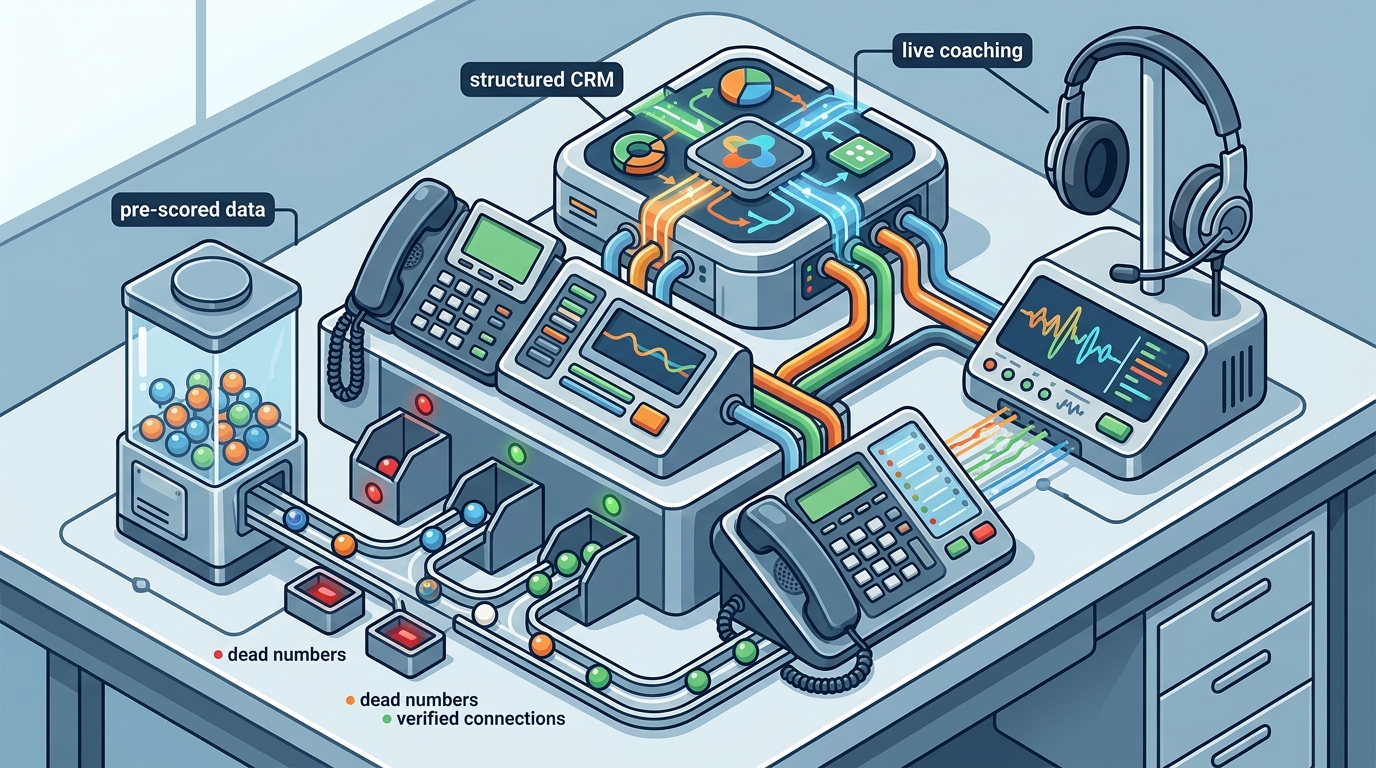
A robust cold calling infrastructure is a synchronized stack of pre-scored data, a reliable dialer, a structured CRM, and live human coaching. It ensures reps spend time on conversations, not dialing dead numbers. Outbound Operators builds this exact system to help B2B teams achieve predictable pipeline through phone-first outbound.
The Foundation: Pre-Scored Contact Data
Effective cold calling infrastructure starts with data quality. A pre-scored contact list is a database where every number has been verified for phone reachability before a rep ever dials it. This approach eliminates the wasted effort of dialing disconnected or invalid numbers. When reps stop chasing dead ends, their daily capacity for meaningful conversations increases significantly.
Outbound Operators emphasizes that data is the engine's fuel. If the fuel is dirty, the engine stalls. By filtering for reachability first, teams can focus their energy on the actual sales process. This foundational layer is critical for any B2B company aiming to scale outbound efforts without burning out their sales development representatives.
The Hardware: Dialers and CRM Integration
The technical backbone of cold calling infrastructure is the integration between a power dialer and a Customer Relationship Management (CRM) system. A power dialer is a software tool that automatically dials numbers and routes live calls to available reps. It must sync seamlessly with the CRM to log every interaction, note, and outcome in real time.
Outbound Operators implements and configures this entire stack for its clients. The goal is a frictionless workflow where the dialer and CRM talk to each other without manual data entry. This integration ensures that no call goes unlogged and that management has a clear view of activity metrics. A well-configured tooling stack is what allows a small team to handle high volumes of dials efficiently.
The Process: Structured Talk Tracks and Coaching
Technology alone does not drive results. The process layer of cold calling infrastructure includes refined talk tracks and continuous live coaching. A talk track is a structured script that guides the rep through the opening, discovery, and closing phases of a call. These scripts are not static; they are refined weekly based on real call recordings and feedback.
Outbound Operators runs daily live coaching on real calls to ensure reps are executing these talk tracks effectively. This human-centric approach is vital because every call is placed live by a human rep, not by an automated system. The coaching loop allows for immediate correction and skill development, which is the primary driver of improved connect-to-conversation rates.
The Metrics: Tracking the Funnel
Finally, cold calling infrastructure requires a clear metrics framework. The core funnel tracks four stages: Connect, Conversation, Meeting, and SQL (Sales Qualified Lead). A SQL is a lead that has been qualified by the sales team as a potential buyer based on specific criteria. Tracking these stages allows teams to identify bottlenecks and optimize each step of the process.
Outbound Operators builds dashboards that track every stage from connect to SQL. This visibility is crucial for understanding what is working and what is not. For example, a high connect rate but low conversation rate might indicate a messaging issue, while a high conversation rate but low meeting rate might suggest a qualification problem. Clear metrics turn raw activity into actionable insights.
Key Takeaways
- Pre-scored data is the foundation of effective cold calling infrastructure.
- Seamless integration between dialers and CRMs is essential for efficiency.
- Live human coaching and refined talk tracks drive conversation quality.
- Tracking the Connect, Conversation, Meeting, and SQL funnel provides actionable insights.
- Outbound Operators builds and installs this full system for B2B teams.
- Every call is placed live by a human rep, ensuring authentic buyer interactions.
Frequently Asked Questions
What is the difference between a power dialer and a predictive dialer?
A power dialer dials one number at a time and waits for the rep to finish the call before dialing the next. A predictive dialer dials multiple numbers simultaneously and routes live calls to available reps. Both require pre-scored data to be effective.
How long does it take to build a cold calling infrastructure?
Outbound Operators installs the full outbound engine in 60 days. This includes building the system, finding, hiring, and training reps, and handing over the keys to the client.
Do you use AI or automated calling?
No. Every call is placed live by a human rep. Outbound Operators does not use automated, autodialed, or AI calling. The focus is on authentic human conversations.
What kind of companies is this for?
Who owns the system and the reps?
The client owns the system, the data, and the reps. Outbound Operators builds the system, finds, hires, and trains the reps, and then hands you the keys.
What is the first step to getting started?
The first step is the Outbound GTM Diagnostic. This 90-minute session involves calling your market live to validate your message and target list before committing to a full build.
Build Your Engine with Outbound Operators
Building a cold calling infrastructure from scratch is complex and time-consuming. Outbound Operators simplifies this process by installing the full outbound engine in 60 days. We build the system, find, hire, and train your reps, and then hand you the keys. To plan your visit, to schedule your diagnostic.