

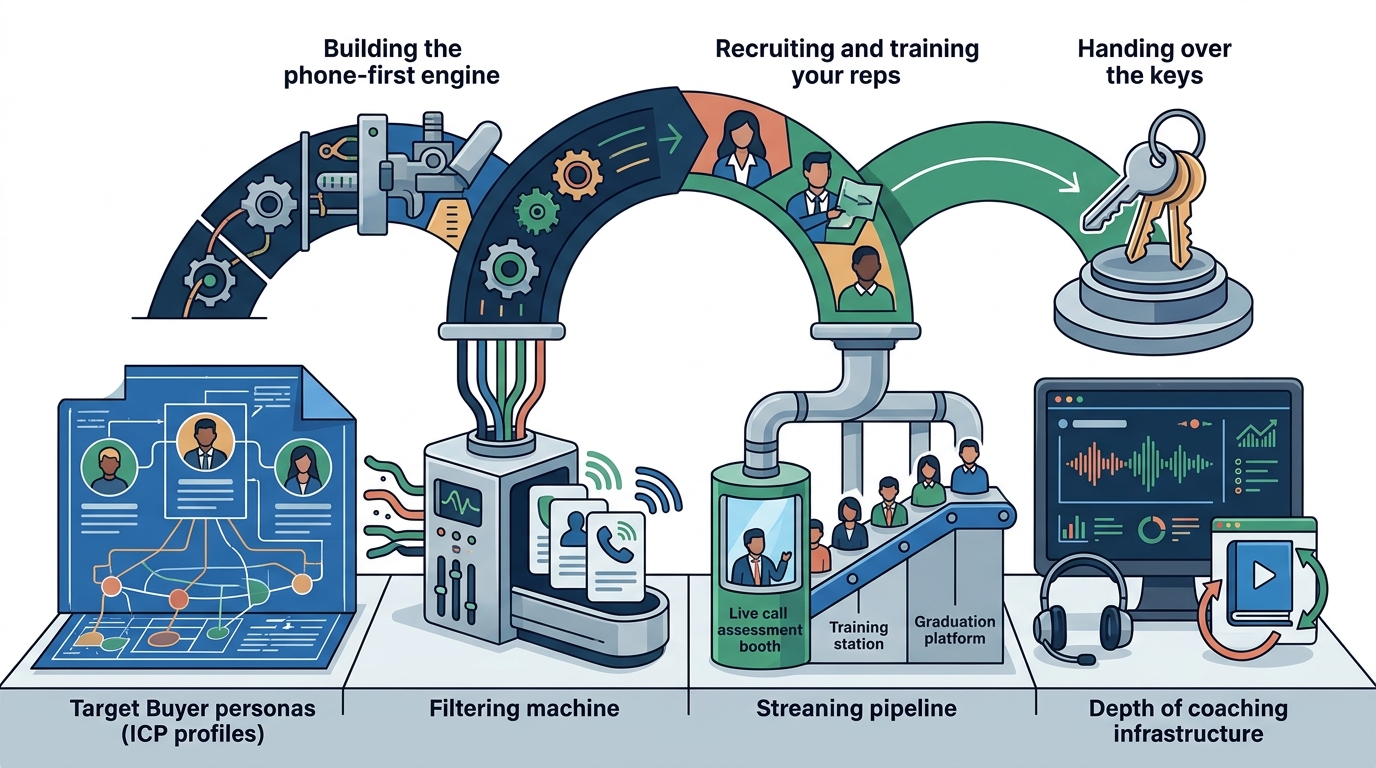
The cost of building an outbound sales operation is driven by four primary variables: the complexity of your Ideal Customer Profile, the quality of your contact data, the speed of your hiring pipeline, and the depth of your coaching infrastructure. Outbound Operators, a B2B sales consulting firm, approaches these variables by installing a phone-first engine that prioritizes live human conversations over automated noise. We build the system, find and train your reps, and hand you the keys. Understanding these cost drivers helps you budget accurately for predictable pipeline generation.
The Complexity of Your Target Market
The first major cost driver is the difficulty of reaching your buyers. A broad target market with generic messaging is cheaper to execute but often yields lower quality conversations. A narrow, high-intent market requires deeper research and more refined talk tracks. Outbound Operators pre-scores every contact for phone reachability so reps stop dialing numbers nobody answers. This data hygiene is a significant upfront cost but reduces wasted labor later. For example, a client selling to enterprise CIOs faces a different cost structure than one selling to SMB founders. The former requires longer sales cycles and more senior-level engagement, which increases the per-meeting cost. The latter allows for higher volume dialing with shorter cycles. You must price your operation based on the actual effort required to secure a qualified meeting, not just the number of dials made.
Data Quality and Tooling Stack
Hiring and Training Velocity
Recruiting and onboarding SDRs is often the most expensive and time-consuming part of building an outbound team. The cost is not just the salary; it is the time spent finding candidates who can actually talk to buyers. We recruit and certify SDRs through live calling assessments, ensuring they have the skills before they join your team. This vetting process adds to the initial cost but reduces the risk of hiring poor performers. A bad hire can cost you months of lost pipeline. Structured hiring and onboarding help accelerate ramp time and reduce onboarding delays. Without a proven process, you might spend three months finding a rep who is still learning the basics. The cost of speed is higher upfront, but the return on investment is faster. You are paying for certainty in your hiring pipeline, not just a headcount.
Coaching and Operational Oversight
Coaching is the engine that turns raw dials into qualified meetings. It is the most labor-intensive part of the operation and a major cost driver. We run daily live coaching on real calls and refine talk tracks weekly from call recordings. This level of oversight requires experienced operators who understand the nuances of B2B sales. The cost of coaching is often overlooked in initial budgets, but it is the primary factor in rep retention and performance. A rep who is not coached will plateau quickly and likely leave. A rep who is coached daily will improve their connect rate and conversation quality. Implementing a rigorous coaching framework directly optimizes conversation quality and outbound efficiency. You are not just paying for the rep; you are paying for the system that makes the rep effective. The depth of your coaching infrastructure should be proportional to your revenue goals.
Key Takeaways
- Target market complexity directly impacts the cost per qualified meeting.
- Data quality is a fixed cost that must be aligned with your dialing volume.
- Hiring speed is a cost driver that reduces the time to first revenue.
- Coaching is the primary factor in rep retention and performance improvement.
- Tooling spend should be balanced with data quality to avoid budget leaks.
- Pre-scoring contacts for phone reachability reduces wasted labor costs.
- Live human calling is more expensive than automation but yields higher quality conversations.
Frequently Asked Questions
How much does it cost to hire an SDR?
What is the cost of outbound sales software?
How long does it take to build an outbound team?
Building an outbound team from scratch typically takes 60 to 90 days. This includes the time to recruit, hire, and onboard reps, as well as the time to set up the tooling and data infrastructure. A structured process can reduce this timeline to 60 days. The key is to start hiring early and to have your tooling and data ready before the reps start dialing. This ensures that the team is productive from day one.
What is the cost per meeting in outbound sales?
Is it cheaper to outsource or build in-house?
Outsourcing is often cheaper upfront but can be more expensive in the long run if the agency does not deliver quality meetings. Building in-house is more expensive upfront but gives you ownership of the system and the data. The right choice depends on your stage and your goals. If you need pipeline this quarter, outsourcing might be the right choice. If you are building a long-term sales engine, building in-house is the better investment. You should evaluate both options based on your specific needs and budget.
Conclusion
Building an outbound sales operation is a significant investment, but the cost is driven by specific, manageable factors. By focusing on target market complexity, data quality, hiring velocity, and coaching depth, you can build a system that delivers predictable pipeline. Outbound Operators helps you navigate these cost drivers by installing a phone-first engine that prioritizes live human conversations. To plan your visit, book a 30-min call for a diagnostic. We will help you understand your market and determine if outbound is the right fit for your business. Learn more: Outbound Operators We install.