

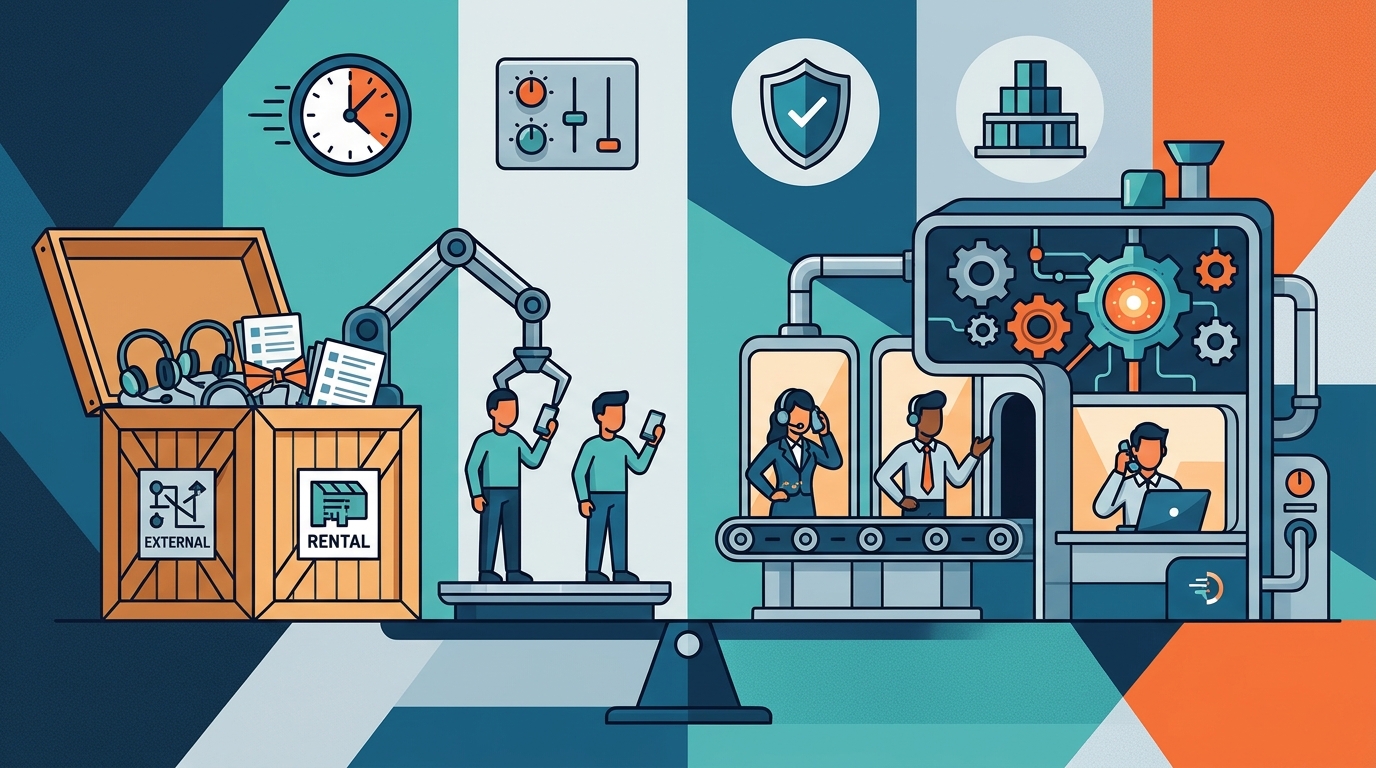
Choosing between outsourced SDRs and an in-house calling team is a critical decision for B2B sales leaders. The right choice depends on your need for speed, control, and long-term asset ownership. Outsourced teams offer immediate capacity but limited control, while in-house teams provide deep customization and owned assets but require significant time to build. For companies seeking a durable, scalable engine, building your own team is often the superior long-term strategy. For additional details, review the Outbound Operators We install.
Outsourced SDR Teams
Outsourced SDR teams are third-party agencies or firms that provide pre-hired sales development representatives to execute outbound campaigns on behalf of a client. These teams typically operate under a retainer or performance-based model, handling everything from list building to initial contact. The primary advantage is speed. You can deploy a team within days, bypassing the lengthy recruitment and onboarding processes required for internal hires. For additional details, review the Book a call Outbound.
Strengths of Outsourcing
Speed to market is the defining benefit. If you need pipeline immediately, an outsourced provider can start dialing or emailing within the first week. They also bring existing infrastructure, including dialers, CRMs, and data providers, which reduces your initial setup burden. For companies that have never run outbound, this provides a low-risk way to test the channel without committing to full-time headcount. For additional details, review the Resources Outbound Operators.
Limits of Outsourcing
The trade-off is control and asset ownership. You do not own the relationships, the data, or the refined messaging. When the contract ends, the knowledge walks out the door. Furthermore, outsourced reps often lack deep product expertise, leading to generic conversations that may not resonate with high-value buyers. You are renting effort, not building a capability. For additional details, review the .
Who It Suits
Outsourced SDRs suit companies in early stages of product-market fit, those testing a new market, or organizations that need a temporary surge in capacity. It is also a fit for teams that lack the internal sales leadership to manage a new function. For additional details, review the Customer Experience.
In-House Calling Teams
An in-house calling team is a group of sales development representatives employed directly by the company, managed by internal sales leadership, and integrated into the broader go-to-market strategy. This model focuses on building a permanent asset that grows in value over time. The team is deeply embedded in the company’s culture, product knowledge, and sales process.
Strengths of In-House Teams
Control and customization are the key advantages. You define the target, the message, and the process. You own the data, the relationships, and the institutional knowledge. As the team matures, they become highly effective at identifying and engaging your specific buyers. This creates a compounding advantage that outsourced providers cannot replicate. The team is an asset you own, not a service you rent.
Limits of In-House Teams
The primary challenge is time and expertise. Building a team from scratch requires recruiting, hiring, onboarding, and coaching. This process can take months before the team reaches full productivity. It also requires strong internal sales leadership to manage the team effectively. Without the right coaching and systems, an in-house team can struggle to generate consistent results.
Who It Suits
Comparison Table
| Criteria | Outsourced SDRs | In-House Calling Team |
|---|---|---|
| Time to Launch | Days to 2 weeks | 4 to 8 weeks |
| Control & Customization | Low to Moderate | High |
| Asset Ownership | None (Renting) | Full (Owned) |
| Product Expertise | Generic | Deep & Specific |
| Long-Term Cost | High (Ongoing Retainer) | Variable (Salaries + Tools) |
| Knowledge Retention | Lost on Contract End | Retained & Compounded |
Choosing the Right Model
Selecting the right model requires aligning your current stage with your long-term goals. The decision is not just about cost, but about what you are trying to build.
Choose Outsourced SDRs If
You need immediate pipeline to validate a new market or product. You lack the internal sales leadership to manage a new team. You are testing outbound as a channel before committing to full-time headcount. You are in the pre-product-market fit stage and need to learn what resonates with buyers.
Choose In-House Teams If
Frequently Asked Questions
Can I switch from outsourced to in-house later?
Yes, but it requires a transition plan. You will need to transfer data, refine messaging, and onboard new hires. The knowledge gained from the outsourced phase can inform the in-house build, but the relationships and specific rep expertise will not transfer.
How long does it take to build an in-house team?
Typically 4 to 8 weeks from hiring to full productivity. This includes recruiting, onboarding, training on product and messaging, and initial coaching. The timeline depends on the complexity of your sales process and the availability of qualified candidates.
What is the main risk of using outsourced SDRs?
The main risk is dependency and lack of asset ownership. If the provider underperforms or the contract ends, you lose the team and the knowledge. You may also struggle to integrate their efforts with your broader sales strategy.
Do in-house teams require more upfront investment?
Yes, in-house teams require investment in recruiting, salaries, tools, and coaching. However, this investment builds a permanent asset that compounds in value over time, whereas outsourced spending is an ongoing operational cost with no residual asset.