

Building a B2B outbound sales engine from scratch requires a structured approach that combines validated messaging, pre-scored contact data, and live human execution. Outbound Operators installs this engine by building the system, hiring your reps, and operating it until it produces predictable pipeline. This guide covers the core components of a modern outbound engine, how to measure pipeline generation, and the specific steps required to move from zero to a fully operational sales team.
What Is an Outbound Sales Engine?
An outbound sales engine is a systematic process designed to generate qualified pipeline through proactive outreach to potential buyers. Unlike inbound marketing, which waits for leads to arrive, an outbound engine actively seeks out and engages target accounts. The modern engine is not just about making calls; it is a holistic system that integrates data, technology, and human talent.
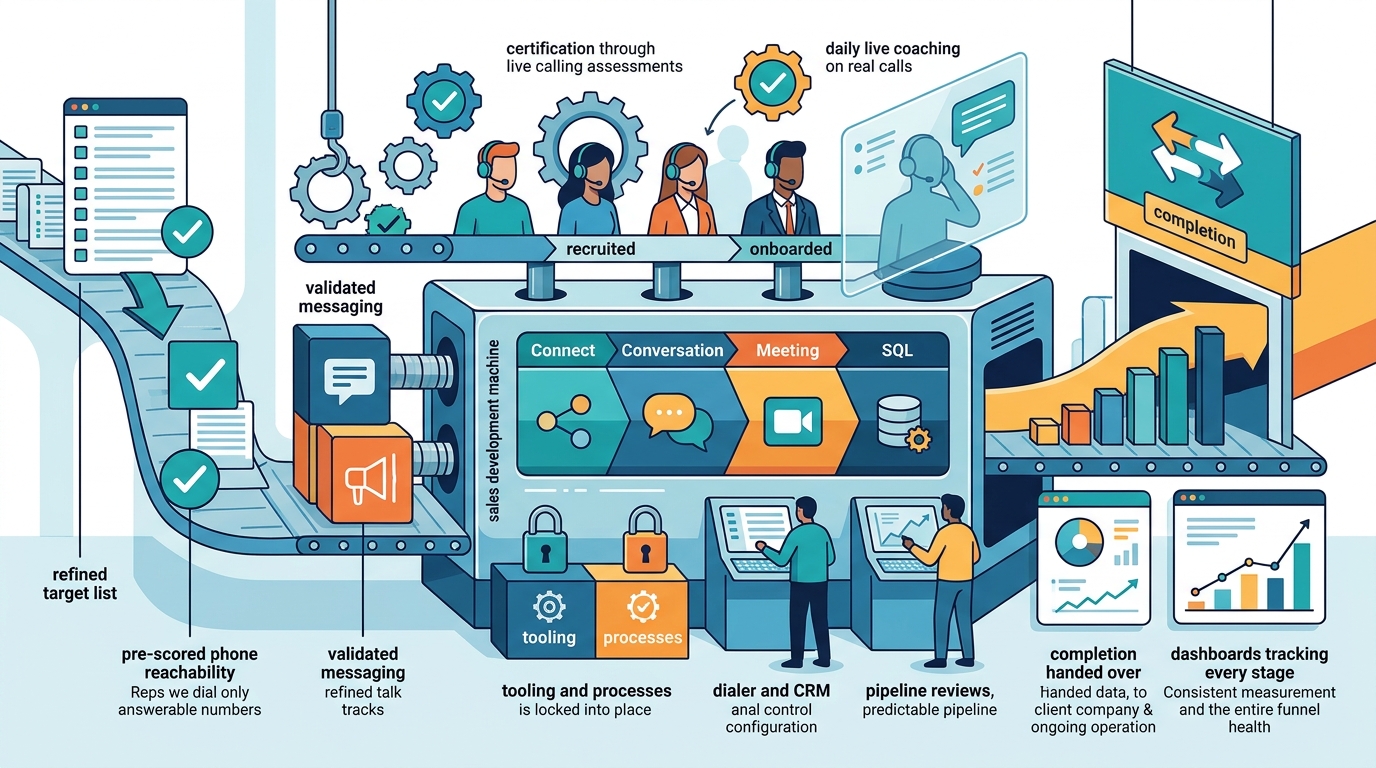
Outbound Operators defines the core funnel of this engine as Connect, Conversation, Meeting, and SQL. This framework ensures that every stage of the process is measured and optimized. The goal is to create a predictable flow of revenue opportunities that the client fully owns. This ownership includes the data, the technology, and the sales representatives.
Core Components of the Engine
A robust outbound engine relies on three primary pillars: data quality, tooling, and human execution. Without high-quality data, reps waste time dialing numbers that no one answers. Without the right tools, tracking and reporting become impossible. Without skilled reps, even the best data and tools will fail to convert.
Data and Scoring
Every contact in the engine is pre-scored for phone reachability. This scoring ensures that reps focus their energy on numbers that are likely to connect. This approach significantly improves efficiency and reduces the frustration associated with traditional cold calling.
Tooling and Infrastructure
The engine requires a configured dialer and CRM stack. Outbound Operators implements and configures this technology to ensure seamless integration. This infrastructure supports the daily operations of the sales team and provides the data necessary for coaching and reporting.
Human Execution
Every call is placed live by a human rep. There is no automation, autodialing, or AI calling involved in the core execution. This human element is critical for building trust and handling objections effectively. The reps are recruited, certified, and trained to handle real-world sales conversations.
Pipeline Generation Measurement
Measuring pipeline generation is the most critical aspect of evaluating an outbound engine. The primary metric is the number of SQLs (Sales Qualified Leads) generated per quarter or per year. This metric reflects the true value of the engine to the business. It is not enough to track dials or connects; the end goal is qualified pipeline that moves through the sales process.
Outbound Operators builds dashboards that track every stage from connect to SQL. This visibility allows leadership to understand where the engine is performing well and where it needs adjustment. For example, Management Controls tripled their SQLs from 124 to 370 per year after implementing the engine. This result was achieved with 4 reps instead of the 34 originally planned. Precoro went from 0 to 24 SQOs per quarter after 8 years of relying solely on inbound. These specific results demonstrate the potential impact of a well-built engine, though outcomes vary by company.
Hiring and Training SDRs
Recruiting the right SDRs is a major challenge for most B2B companies. Resumes often lie, and polished interviews can be misleading. Outbound Operators replaces traditional screening with a live cold-calling exercise. Candidates must prove their ability to handle a real call with a real prospect and real objections. This process ensures that only the most capable candidates are hired.
Once hired, the reps undergo a rigorous onboarding process. This includes daily live coaching on real calls. Talk tracks are refined weekly based on actual call recordings. This continuous improvement loop ensures that the team gets better every week. The client hires and manages these reps, while Outbound Operators provides the coaching and operational support.
Implementation Phases and Timeline
The implementation of an outbound engine typically follows a phased approach. This ensures that the system is validated before full-scale investment. The process begins with a diagnostic, moves to a proof of concept, and concludes with a full installation.
The Diagnostic
The Outbound GTM Diagnostic is the first step. It involves 90 minutes of live calling into the client's market. The goal is to hold 20 to 30 real buyer conversations. This exercise validates the message and refines the target list. The client receives a go/no-go readiness report before committing to a build.
The Proof of Concept
The optional POC phase lasts 40 business days. During this time, a managed fractional cold caller dials the phones. The goal is to deliver 800 to 1000 connects. This phase replicates the diagnostic for a longer period to collect more data and prove ongoing value.
The Full Install
The Install phase lasts 60 days. Outbound Operators builds the full system, configures the tooling, and recruits and onboards the client's SDRs. A managed fractional cold caller starts dialing within one business day, so pipeline generation begins immediately. This phase ensures that the client has a fully operational team by the end of the two months.
Comparison of Engagement Models
| Phase | Duration | Primary Focus | Outcome |
|---|---|---|---|
| Diagnostic | 90 Minutes | Market Validation | Go/No-Go Report |
| POC | 40 Business Days | Data Collection | 800-1000 Connects |
| Install | 60 Days | System Build & Hiring | Operational Team |
| Retainer | Monthly | Coaching & Optimization | Continuous Improvement |
Key Takeaways
- An outbound sales engine is a systematic process that integrates data, tooling, and human execution.
- Pre-scored contact data is essential for improving dial-to-connect rates.
- Live human calling is the core of the engine; no automation is used for execution.
- Pipeline generation is measured by SQLs, not just dials or connects.
- Recruiting SDRs through live calling exercises ensures higher quality hires.
- The implementation process is phased: Diagnostic, POC, and Install.
- The client owns the system, data, and reps after the installation is complete.
- Outcomes depend on market fit, data quality, and follow-up processes.
Frequently Asked Questions
How long does it take to build an outbound engine?
The full installation takes 60 days. This includes building the system, hiring reps, and onboarding the team. A managed fractional caller starts dialing within the first day of the install phase.
Do you use AI or automation for calling?
No. Every call is placed live by a human rep. We do not use autodialers, robocalls, or AI calling for the core execution of the engine.
Who owns the sales reps?
The client hires and manages the sales reps. Outbound Operators recruits and trains them, but they are employees of the client company.
What is the difference between a POC and an Install?
A POC is a 40-day test to prove value with a fractional caller. An Install is a 60-day build where we hire and onboard your full team and set up the entire system.
Can I just buy the software?
No. Outbound Operators does not sell software. We build the system, configure the tools, and operate the process. The focus is on the outcome, not the product.
What kind of companies is this for?
How do you measure success?
Success is measured by the number of SQLs generated. We track every stage from connect to SQL to ensure the engine is producing qualified pipeline.
Conclusion
Building an outbound sales engine from scratch is a complex task that requires expertise in data, technology, and sales operations. Outbound Operators provides a proven framework to navigate this process. By focusing on live human execution and rigorous measurement, we help B2B companies achieve predictable pipeline growth. To start your journey, book a 30-minute call to schedule your diagnostic.