

7 Key Stages of Transitioning Outbound Operations to Your Internal Team
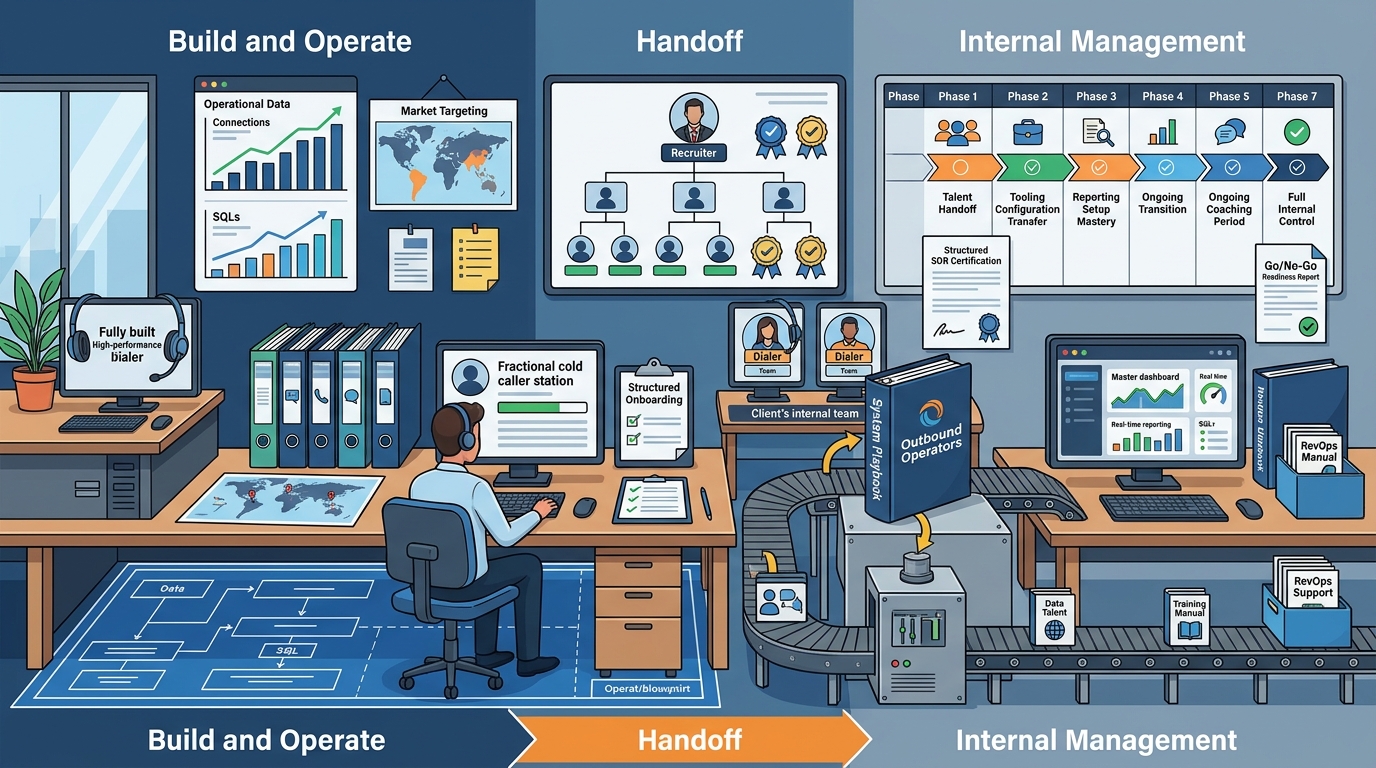
Transitioning outbound operations from a vendor to an internal team is a structured process that ensures your sales engine remains effective after the consultant leaves. Outbound Operators specializes in this managed handoff model, building the system, hiring the talent, and training the reps before handing over the keys. This approach prevents the common failure mode where a new team inherits a broken process and loses momentum immediately.
1. Validating the Market and Message
Confirm that your target buyers actually answer the phone and engage with your value proposition. Before building a full team, you must prove that the channel works for your specific industry. Outbound Operators begins with a diagnostic phase where we call your market live to hold real conversations. This step validates your messaging and refines your target list, ensuring you do not scale a strategy that does not resonate with buyers.
2. Building the Technical Infrastructure
Implement the dialer, CRM, and reporting stack before the first rep starts dialing. A robust outbound engine requires clean data and integrated tools. We configure the technology stack to ensure every contact is pre-scored for phone reachability. This technical foundation allows reps to focus on conversations rather than troubleshooting software or dialing dead numbers. according to Exploring New Horizons
3. Recruiting and Certifying SDRs
Hire sales development representatives who are proven on live calls, not just on paper. Resumes often misrepresent a candidate's ability to handle rejection and objection handling. Outbound Operators recruits SDRs through live calling assessments where candidates must demonstrate their skills in real-time. The client hires and manages these reps, but the vendor ensures they are certified and ready to perform from day one.
4. Onboarding and Process Standardization
Train new hires on the exact talk tracks and workflows that generated the initial success. Onboarding is not just about software access; it is about behavioral alignment. We onboard reps using the refined talk tracks and daily coaching protocols established during the diagnostic phase. This ensures consistency in how the team approaches every prospect, regardless of who is on the phone.
5. Daily Live Coaching and Feedback
Provide continuous, real-time feedback on call recordings to refine performance. Skill development happens through repetition and correction. During the transition period, we run daily live coaching sessions where we review real call recordings with the team. This feedback loop allows us to identify gaps in objection handling and refine the messaging weekly based on actual buyer responses.
6. Establishing Reporting and Accountability
Build dashboards that track every stage from connect to SQL to ensure visibility. You cannot manage what you cannot measure. We build reporting structures that track key metrics such as dial-to-connect rates, conversation quality, and meeting bookings. This transparency allows internal leadership to monitor performance and make data-driven decisions about resource allocation and strategy adjustments.
7. The Final Handoff and Independence
Transfer full ownership of the system, data, and team to the client. The final stage involves a formal handoff where the vendor steps back and the internal team takes full control. Outbound Operators hands over the keys to the system, ensuring the client owns the data, the tools, and the reps. This independence allows the company to scale the engine without ongoing dependency on the external provider.
Choosing the Right Transition Path
Select the transition path that matches your current maturity level. If you have never run outbound, start with a diagnostic to validate the market. If you have a team but lack process, focus on coaching and reporting. If you have both, ensure the technical infrastructure is robust before scaling headcount. The goal is always a self-sustaining engine that your team owns and operates. according to Exploring New Horizons
Frequently Asked Questions
How long does the transition from vendor to internal team take?
The timeline varies based on the complexity of the build, but a full installation typically takes 60 days. This period includes building the system, hiring the reps, and running the daily coaching sessions necessary to ensure the team is ready to operate independently.
Who owns the SDRs during the transition?
The client hires and manages the SDRs. The vendor recruits and certifies the talent, but the employment relationship is directly with the client. This ensures the client has full control over their sales team and data from the start.
What happens to the data and tools after the handoff?
The client retains full ownership of all data, tools, and systems. The vendor does not retain access to the client's CRM or dialer after the handoff. This ensures the client can continue operating the engine without any dependency on the external provider.
Is the vendor involved after the handoff?
Depending on the engagement, the vendor may offer an ongoing retainer for coaching and support. However, the core system is designed to be self-sustaining, and the client is expected to run it independently after the handoff.
How is the success of the transition measured?
Success is measured by the team's ability to generate consistent pipeline using the established processes. Key metrics include dial-to-connect rates, meeting bookings, and SQL generation. The goal is for the internal team to replicate the performance achieved during the vendor-led phase.
Start Your Transition with Outbound Operators
Ready to build an outbound engine that your team can own and operate? Book a 30-minute call with Outbound Operators to discuss your specific needs and determine the right path for your transition. according to Exploring New Horizons