

Outsourced SDR Teams vs In-House Calling: The 2026 Decision Framework
The Core Trade-Off: Speed vs. Ownership
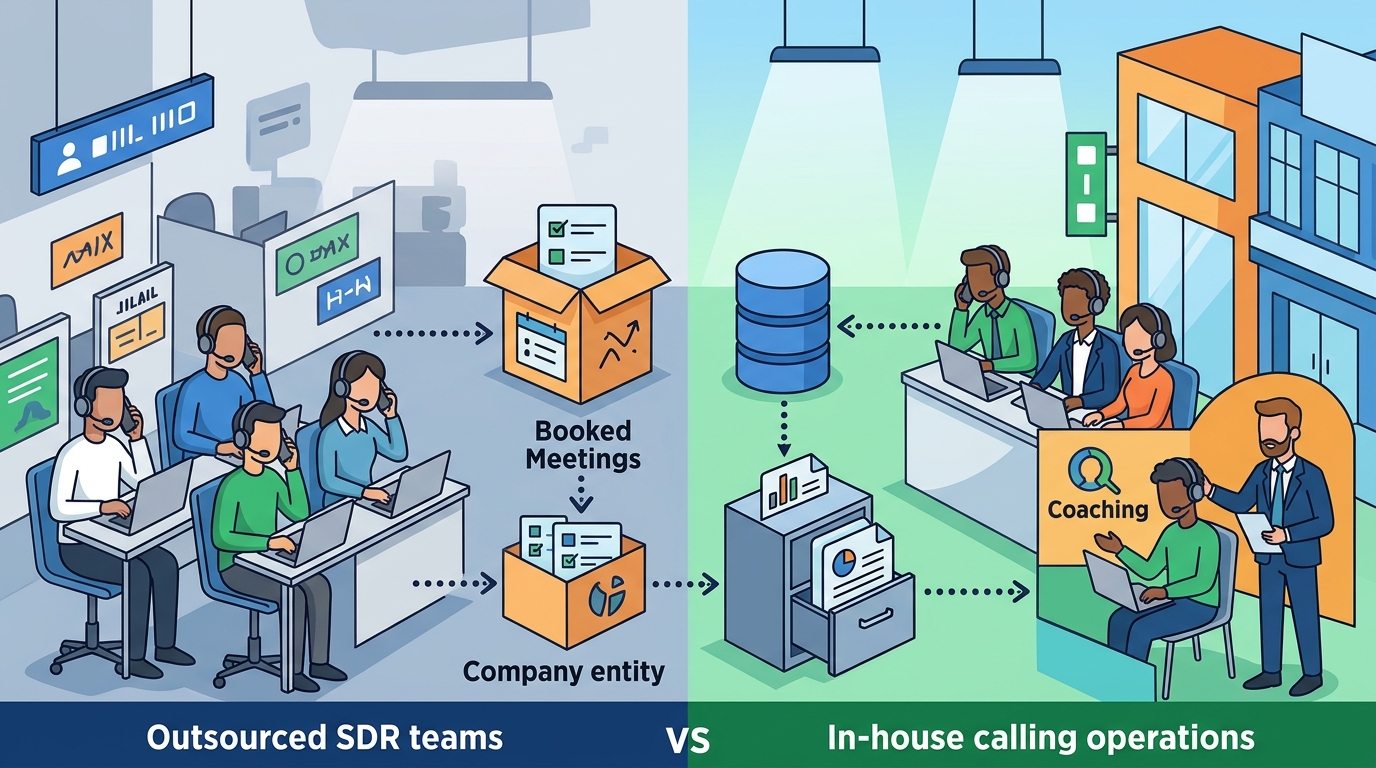
Outsourced SDR teams are third-party groups that handle cold calling on your behalf, typically delivering booked meetings for a monthly fee. In-house calling operations are internal teams where you hire, train, and manage your own sales development representatives. The fundamental difference is asset retention. When you hire externally, the talent, scripts, and data often leave with the agency when the contract ends. When you build internally, you own the system, the data, and the reps. This distinction matters most for companies that view sales as a core competency rather than a utility.
Why Outsourced Teams Often Fail to Scale
Many B2B companies try outsourced SDRs because they need pipeline this quarter. The problem is that outsourced teams rarely build the infrastructure required for sustainable growth. They focus on volume, not on the quality of the connect-to-meeting funnel. Without a dedicated RevOps structure, the data quality degrades over time. This leads to a cycle where you pay for meetings but never build a repeatable process. The implication is clear: if you are not ready to invest in the underlying engine, outsourcing is a temporary band-aid, not a solution.
The Case for Building an In-House Engine
An in-house calling operation is a structured system that integrates targeting, messaging, tooling, and coaching into a single workflow. This approach allows you to refine talk tracks weekly from real call recordings. It also ensures that your sales development representatives are certified through live calling assessments before they touch a prospect. By owning the process, you can track every stage from connect to SQL with precision. This level of control is impossible with a black-box outsourced service. The result is a team that improves over time, rather than one that resets every month.
How to Validate Your Market Before Hiring
Before you decide to hire, you must confirm that your market is actually reachable by phone. A validated market is one where buyers are willing to engage in live conversations about their pain points. Outbound Operators runs a 90-minute diagnostic where we call your market live and hold 20 to 30 real buyer conversations. This step is critical because it tells you whether outbound will pencil for your specific industry. If the diagnostic shows low engagement, you save the cost of a full build. If it shows high engagement, you have the data to justify an in-house investment. This evidence-based approach removes the guesswork from the hiring decision.
Choosing the Right Path for Your Stage
Seed and Series A companies often lack the bandwidth to build a full engine from scratch. For these teams, a hybrid approach can work. You might start with a fractional cold caller to generate initial data while you begin recruiting your first in-house SDR. This allows you to test the waters without committing to a full-time hire immediately. However, the end goal should always be ownership. As you scale to Series B and beyond, the value of an in-house team compounds. You are not just buying meetings; you are building a sales asset that appreciates over time. This long-term view is what separates sustainable growth from temporary spikes.
Key Takeaways
- Outsourced SDR teams provide speed but do not transfer ownership of talent or data to your company.
- In-house calling operations allow you to own the system, the data, and the reps, creating a durable sales asset.
- Outsourced teams often focus on volume rather than the quality of the connect-to-meeting funnel, leading to data degradation.
- Building an in-house engine requires integrating targeting, messaging, tooling, and coaching into a single workflow.
- Validating your market with live calls before hiring is essential to confirm that outbound will work for your industry.
- A hybrid approach can work for early-stage companies, but the end goal should always be ownership of the sales process.
Frequently Asked Questions
What is the main difference between an outsourced SDR and an in-house SDR?
The main difference is ownership. An outsourced SDR is employed by a third-party agency, and the talent and data often leave when the contract ends. An in-house SDR is your employee, and you own the system, the data, and the relationship.
How long does it take to build an in-house calling operation?
Building a full in-house engine typically takes 60 days. This includes recruiting, onboarding, and training your reps, as well as configuring the dialer and CRM stack. A managed fractional cold caller can start dialing within one business day to generate initial pipeline.
Is outsourcing a good fit for B2B companies?
Outsourcing can be a fit for companies that need immediate pipeline and are not ready to invest in a full build. However, it is not a long-term solution for companies that view sales as a core competency. It is best used as a temporary bridge while you prepare to build your own team.
How do I know if my market is reachable by phone?
You can validate your market by running a diagnostic that involves live calls with your target buyers. This step confirms whether your buyers are willing to engage in conversations about their pain points. If the diagnostic shows low engagement, you may need to adjust your messaging or target a different segment.
What is the cost of building an in-house calling operation?
The cost varies based on the size of the team and the tools required. A full installation typically includes the cost of recruiting, onboarding, and training your reps, as well as the cost of the dialer and CRM stack. It is an investment in a durable sales asset, not a monthly expense.
Next Steps
If you are unsure whether to outsource or build, start with a diagnostic. Book a 30-minute call with Outbound Operators to discuss your market and determine the best path forward. We will help you validate your fit before you commit to a build.