

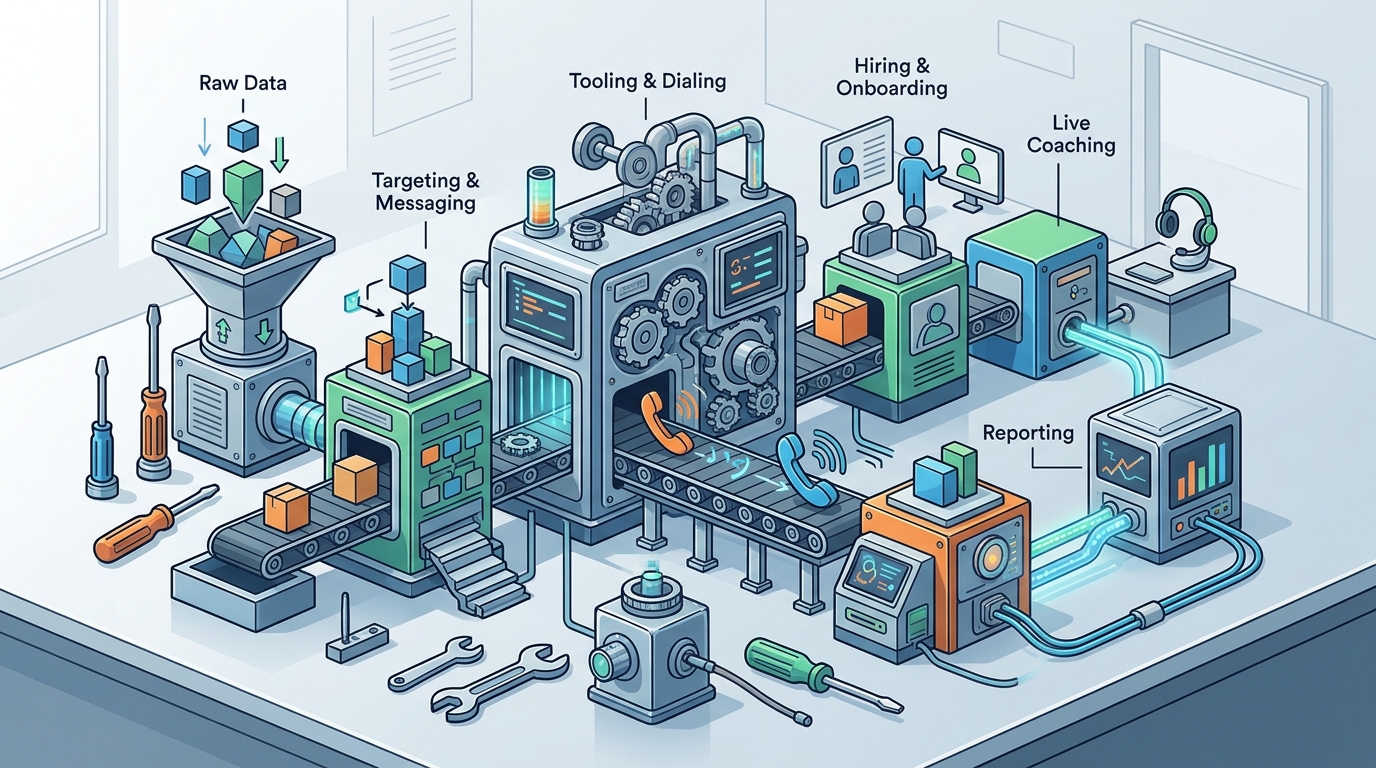
Building a reliable outbound engine requires more than just a phone number and a list of names. A modern cold calling infrastructure is a coordinated system of data, technology, and human processes designed to maximize live conversations. Outbound Operators focuses on installing these systems for B2B companies that need predictable pipeline. This checklist outlines the seven essential layers that separate effective phone-first sales teams from those that struggle to connect.
1. Pre-Scored Contact Data
Quality data is the foundation of any successful dialing strategy. Raw lists often contain outdated numbers or unverified emails, leading to low connect rates. A modern stack uses pre-scored data where every contact is validated for phone reachability before a rep ever dials. This ensures that sales development representatives (SDRs) spend their time on numbers that are actually likely to be answered.
2. Integrated Dialer and CRM Stack
Seamless integration between dialing tools and CRM software is critical for efficiency. The dialer is the interface through which reps place calls, while the CRM is the system of record for all interactions. When these two systems are properly configured, call outcomes, notes, and next steps are logged automatically. This reduces manual data entry and ensures that no conversation is lost in the pipeline.
3. Live Call Recording and Review
Continuous improvement relies on analyzing real conversations. Modern infrastructure includes the ability to record every live call. These recordings are not just for compliance; they are the primary source of truth for coaching. By reviewing actual calls, managers can identify where reps lose momentum or fail to handle objections. This data drives weekly refinements to talk tracks and messaging.
4. Dynamic Talk Tracks and Messaging
Static scripts fail in dynamic markets; messaging must evolve. A robust infrastructure supports the rapid iteration of talk tracks based on live call data. Instead of relying on a one-size-fits-all script, reps use modular messaging blocks that can be adjusted based on the prospect's response. This flexibility allows the team to test different angles and quickly double down on what resonates with the target audience.
5. Real-Time Coaching and Feedback Loops
Skills are built through practice and immediate correction. The infrastructure must facilitate daily coaching sessions where managers listen to live or recorded calls with reps. This creates a feedback loop where mistakes are corrected in real-time, and best practices are shared across the team. Without this layer, reps operate in silos and fail to scale their effectiveness.
6. Comprehensive Pipeline Dashboards
Visibility into every stage of the funnel is essential for management. A modern setup includes dashboards that track metrics from initial connect to qualified sales opportunity (SQL). Leaders need to see not just the volume of dials, but the conversion rates at each step. This transparency allows for data-driven decisions about resource allocation and process adjustments.
7. Structured Hiring and Onboarding Process
Choosing the Right Infrastructure
When selecting components for your outbound engine, prioritize integration and data quality. The best technology stack is one that reduces friction for your reps and provides clear visibility for your leadership. Outbound Operators helps B2B teams build these systems from scratch, ensuring that every component works together to drive results.
Frequently Asked Questions
What is the most important component of cold calling infrastructure?
Pre-scored contact data is often the most critical component because it directly impacts the connect rate. Without high-quality data, even the best reps and tools will struggle to generate conversations.
How often should talk tracks be updated?
Talk tracks should be refined weekly based on live call recordings and feedback. This ensures that messaging remains relevant and effective as market conditions and prospect responses change.
Do I need to hire SDRs before building the infrastructure?
It is often more effective to build the core infrastructure first, then hire and onboard SDRs into the system. This ensures that new hires are trained on a working process rather than creating one from scratch.
Can I use any CRM with a modern dialer?
While many CRMs can integrate with dialers, the quality of the integration matters. A seamless integration that automatically logs call outcomes is essential for maintaining data integrity and reducing manual work.
How does Outbound Operators help with this infrastructure?
Outbound Operators builds the full engine, including targeting, messaging, tooling, and hiring. We operate the system alongside the client until it produces predictable pipeline, then hand over the keys to the client's team.
Next Steps
If you are ready to build a phone-first outbound engine, book a 30-minute call with Outbound Operators. We will assess your current setup and help you determine the best path to a scalable sales system.