

Structure your sales talk tracks by leading with a specific, verifiable problem rather than a generic pitch. A strong talk track is a conversational framework that guides the rep through discovery, value articulation, and a clear next step. Outbound Operators refines these scripts weekly using real call recordings to ensure every sentence drives the conversation forward. This approach transforms cold dials into meaningful buyer conversations.
The Anatomy of a High-Converting Talk Track
A standard cold call script often fails because it sounds like a sales pitch. A talk track is a flexible guide that allows the rep to adapt to the buyer's responses while maintaining a logical flow. The first 15 seconds determine whether the buyer hangs up or stays on the line. You must establish relevance immediately by referencing a specific trigger event or industry pain point. This initial hook must be concise and respectful of the buyer's time.
After the hook, the rep transitions into discovery. This phase is not about selling; it is about asking questions that reveal the buyer's current challenges. The rep should listen more than they speak during this stage. By asking open-ended questions, the rep gathers the data needed to tailor the value proposition. This ensures the subsequent pitch addresses the buyer's specific needs rather than a generic list of features.
Why Generic Scripts Kill Conversion Rates
Many B2B companies rely on static scripts that have not been updated in years. These scripts often focus on the company's history or broad capabilities, which buyers have heard a hundred times before. When a rep reads from a rigid script, the buyer can detect the lack of genuine interest. This creates friction and reduces the likelihood of booking a meeting. The goal is to sound like a helpful peer, not a telemarketer.
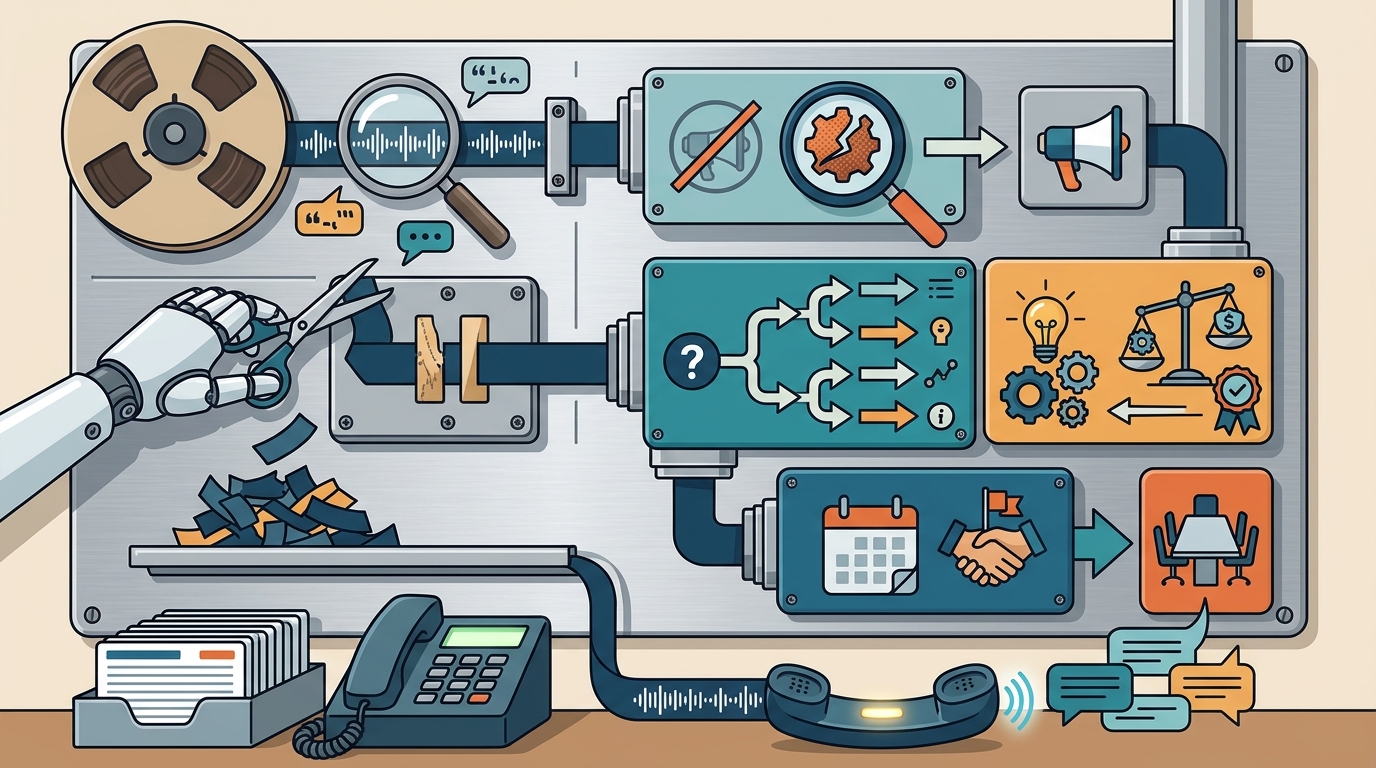
Outbound Operators emphasizes that talk tracks must be refined from real call recordings. By analyzing where calls drop off, teams can identify weak transitions or confusing language. For example, if a specific question consistently causes the buyer to go silent, the script needs adjustment. This iterative process ensures the talk track evolves with the market. It turns static text into a dynamic tool for live conversations.
The Role of Live Coaching in Talk Track Refinement
Writing a talk track is only the first step. The real value comes from coaching reps on how to deliver it naturally. A rep who memorizes a script will sound robotic and untrustworthy. Live coaching allows managers to listen to real calls and provide immediate feedback. This feedback loop helps reps internalize the key messages so they can adapt them on the fly. The rep should know the core value proposition but have the freedom to express it in their own voice.
At Outbound Operators, we run daily live coaching on real calls. This means the coaching is specific and actionable. Instead of generic advice, the coach points out exactly which sentence worked and which one failed. This level of detail accelerates the learning curve for new SDRs. It also helps experienced reps break bad habits. The result is a team that can handle objections and keep the conversation moving toward a meeting.
Measuring Talk Track Effectiveness
You cannot improve what you do not measure. Tracking the performance of a talk track requires looking at specific metrics beyond just meetings booked. Connect rate is a good starting point, but it does not tell you if the message resonated. Conversation rate, which measures the percentage of connects that turn into a two-way dialogue, is a more accurate indicator of talk track quality. If the connect rate is high but the conversation rate is low, the hook or opening is likely failing.
Meeting rate is the final metric to evaluate. This measures the percentage of conversations that result in a booked meeting. A high conversation rate with a low meeting rate suggests the value proposition is not compelling enough. By tracking these three metrics, teams can pinpoint exactly where the talk track needs adjustment. This data-driven approach removes guesswork from script development. It ensures that every change is backed by evidence.
Implementing a Talk Track System in Your Team
Implementing a talk track system requires more than just writing a document. It requires a process for testing, coaching, and iterating. Start by documenting your current best-performing scripts. Then, identify the top three objections your reps face. Create specific responses for each objection and add them to the talk track. This prepares reps for the most common hurdles they will encounter. The system should be simple enough for new hires to learn quickly but detailed enough to guide experienced reps.
Outbound Operators builds this system as part of our full outbound engine installation. We do not just hand over a script; we build the process around it. This includes setting up the CRM to track talk track performance and establishing a weekly review cadence. The team reviews call recordings together to identify trends and opportunities for improvement. This collaborative approach ensures that the talk track remains relevant as the market changes. It creates a culture of continuous improvement within the sales team.
Key Takeaways
- Lead with a specific, verifiable problem to establish relevance in the first 15 seconds.
- Use discovery questions to gather data before presenting your value proposition.
- Refine talk tracks weekly using real call recordings to identify weak points.
- Provide live coaching to help reps deliver the script naturally and adapt to responses.
- Track connect, conversation, and meeting rates to measure talk track effectiveness.
- Create specific responses for the top three objections your team faces.
- Establish a weekly review cadence to keep the talk track aligned with market changes. according to Research America s
Frequently Asked Questions
How long should a cold call talk track be?
A cold call talk track should be concise enough to fit within a 2 to 3 minute conversation. The goal is to start a dialogue, not deliver a monologue. Keep the script to one page or less to ensure reps can remember the key points.
Should I use a script or a talk track?
Use a talk track rather than a rigid script. A talk track provides a framework for the conversation, allowing the rep to adapt to the buyer's responses. This flexibility makes the interaction feel more natural and less robotic.
How often should I update my talk track?
Update your talk track weekly based on call recordings and performance data. Markets and buyer behaviors change quickly, so a static script will become outdated. Weekly reviews ensure the message remains relevant and effective. according to Research America s
What is the most important part of a talk track?
The opening hook is the most critical part. It determines whether the buyer stays on the line. A strong hook references a specific problem or trigger event that is relevant to the buyer's role and industry.
How do I measure if my talk track is working?
Measure connect rate, conversation rate, and meeting rate. These metrics show how well the script performs at each stage of the call. A high conversation rate indicates the hook and discovery are working well.
Can I use the same talk track for all prospects?
No, you should segment your talk tracks by industry, role, or pain point. A generic message will not resonate with every buyer. Tailoring the script to specific segments increases relevance and conversion rates.
Build a Talk Track System That Scales
Structuring your sales talk tracks is a continuous process that requires data, coaching, and iteration. A static script will not survive in a competitive B2B market. You need a system that allows your team to learn from every call and improve their messaging over time. Outbound Operators helps you build this system by combining talk track development with live coaching and performance tracking. We ensure your reps have the tools and guidance they need to turn cold dials into booked meetings. To start building your outbound engine, book a call with our team.