

How a Managed Handoff Model Works for Outbound Sales Teams
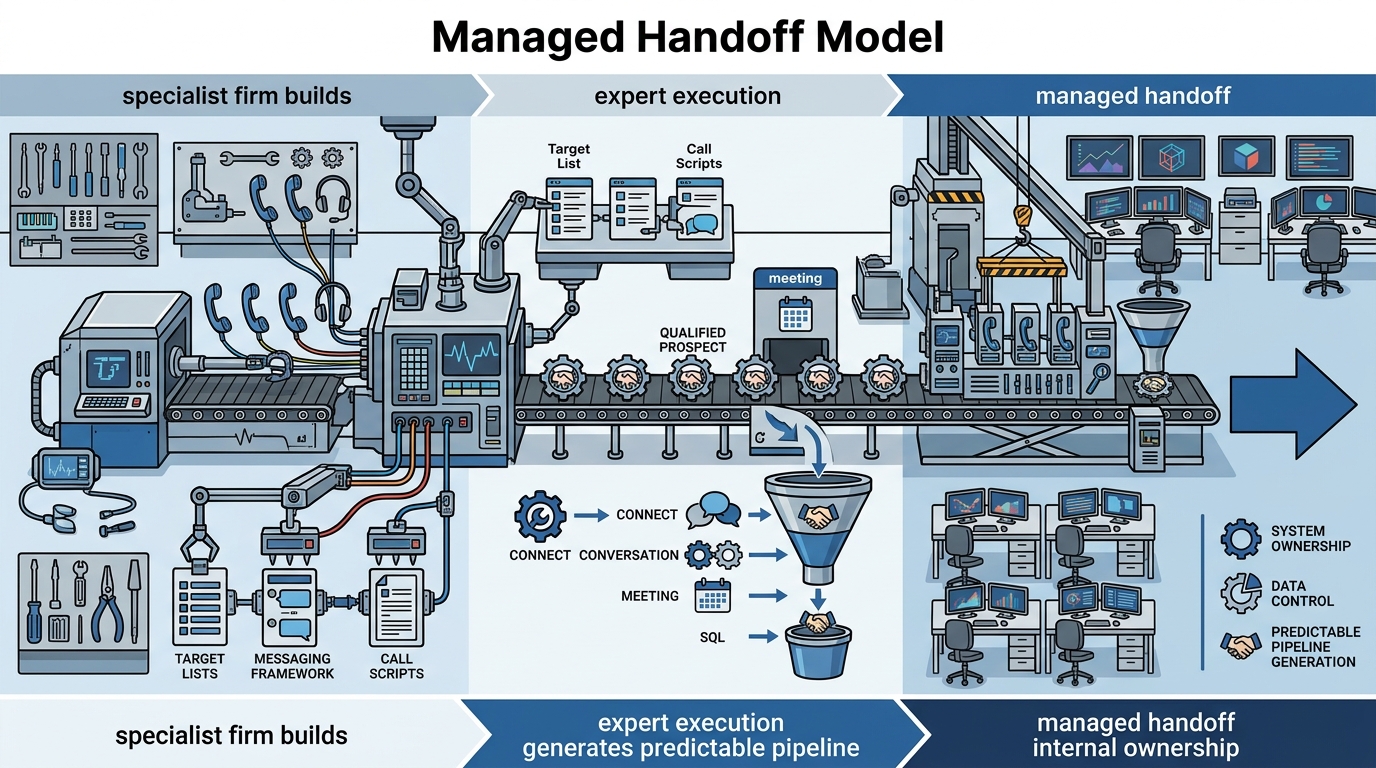
A managed handoff model is a phased engagement where a specialist firm builds, operates, and then transfers a complete outbound sales system to the client's internal team. This approach ensures the client owns the infrastructure, data, and personnel while benefiting from expert execution during the critical ramp-up period. Outbound Operators uses this model to install phone-first outbound engines that generate predictable pipeline before the client takes the wheel.
The Phased Approach
Most companies fail at outbound because they try to build, hire, and scale simultaneously. A managed handoff separates these tasks into distinct phases. First, the firm validates the market and message. Next, it builds the technical stack and hires the team. Finally, it operates the system alongside the client until the team is self-sufficient. This structure reduces risk and accelerates time-to-value. For additional details, review the .
Outbound Operators begins with a diagnostic phase to confirm the market responds to phone-first outreach. This validation step ensures the client does not invest in a full build if the motion is not viable. The diagnostic provides a go/no-go recommendation based on live data, not assumptions. For additional details, review the Customer Experience.
Building the Engine
Once the market is validated, the firm builds the technical infrastructure. This includes configuring the dialer, CRM, and data enrichment tools. The firm also recruits and onboards the client's SDRs. These reps are hired by the client, not the agency, ensuring the client retains ownership of the team. The firm certifies these reps through live calling assessments before they begin dialing.
For example, at Ledge, a trained SDR was on the phones 12 days after signing. This speed is possible because the firm handles the technical setup and recruiting logistics. The client's leadership team focuses on strategy while the firm handles execution. This division of labor prevents bottlenecks during the critical first month.
Operating and Coaching
During the operating phase, the firm runs daily live coaching on real calls. Talk tracks are refined weekly based on call recordings and conversion data. This continuous improvement loop ensures the team adapts to market feedback quickly. The firm also builds dashboards that track every stage from connect to SQL. These metrics provide visibility into performance and identify areas for improvement.
At Management Controls, the firm helped the team triple SQLs from 124 to 370 per year. This outcome was achieved with four reps instead of the originally planned 34. The efficiency gain came from refined messaging and targeted dialing. The firm's coaching ensured the reps focused on high-intent conversations rather than volume alone.
The Handoff Process
At Precoro, the firm helped the team go from zero to 24 SQOs per quarter after eight years of inbound-only sales. The handoff was successful because the team had been coached on the system for several months. They understood the metrics, the messaging, and the process. This confidence allowed them to sustain performance after the firm's departure.
Why It Matters
A managed handoff model matters because it mitigates the risk of building an outbound team from scratch. It provides the client with a proven system, a trained team, and a clear path to independence. The client owns the assets, the data, and the reps. This ownership is crucial for long-term sustainability and scalability. The firm's role is to install the engine, not to operate it indefinitely.
Key Takeaways
- A managed handoff model separates building, operating, and transferring an outbound system into distinct phases.
- The client owns the infrastructure, data, and personnel, ensuring long-term control and scalability.
- Live coaching and weekly talk track refinements are essential for rapid team development and performance improvement.
- Validating the market and message before a full build reduces risk and ensures the motion is viable.
- Efficiency gains, such as reducing headcount while increasing SQLs, are common outcomes of a well-executed managed handoff.
Frequently Asked Questions
What is a managed handoff model in outbound sales?
A managed handoff model is a phased engagement where a specialist firm builds, operates, and then transfers a complete outbound sales system to the client's internal team, ensuring the client owns the infrastructure and personnel.
Who owns the SDRs in a managed handoff model?
The client hires and manages the SDRs. The firm recruits and certifies them, but they are employees of the client, not the agency. This ensures the client retains ownership of the team.
How long does the handoff process take?
Does the firm stay on after the handoff?
The firm may stay on for ongoing support, including daily coaching and pipeline reviews, on a month-to-month basis. However, the client can also choose to exit the relationship once the team is fully self-sufficient.
What metrics are tracked during the handoff?
Metrics tracked include dial-to-connect rate, conversation rate, meeting booking rate, and SQL conversion. These metrics provide visibility into performance and identify areas for improvement during the transition.
Is the managed handoff model suitable for all B2B companies?
How does the firm ensure the client's team is ready for the handoff?
The firm ensures readiness through live calling assessments, daily coaching, and structured training. The client's team must demonstrate competence in the system, messaging, and metrics before the handoff is finalized.
Conclusion
A managed handoff model provides a structured path to building a sustainable outbound sales team. By separating the build, operate, and transfer phases, the client benefits from expert execution while retaining ownership of the assets. Outbound Operators specializes in this model, installing phone-first outbound engines that generate predictable pipeline before the client takes the wheel. To explore how this model can work for your company, book a 30-minute call with the team.