

Outbound sales infrastructure providers build RevOps systems that actually stick by embedding the technology directly into the daily workflow of human sales reps, rather than treating it as a separate administrative layer. The system must reduce friction for the rep while providing clear, real-time data for leadership. When the tooling aligns with the natural rhythm of live calling, adoption becomes automatic. Outbound Operators focuses on this integration to ensure the infrastructure remains functional long after the initial build phase ends.
The Core Definition of a Sticking System
A RevOps system is the integrated stack of tools, data, and processes that manages the revenue lifecycle from lead to close. For the system to stick, it must solve a specific pain point for the end user, the sales development representative. If the CRM or dialer requires manual data entry that slows down dialing, reps will bypass it. The infrastructure must be configured so that the act of selling and the act of recording data happen simultaneously. This eliminates the post-call administrative burden that typically causes system abandonment. For additional details, review the Customer Experience.
Pre-Scoring Data for Phone Reachability
One of the primary reasons RevOps systems fail is poor data quality. Reps waste hours dialing numbers that are disconnected or never answered. Outbound Operators addresses this by pre-scoring every contact for phone reachability before a rep ever picks up the phone. This data layer is critical because it ensures the dialer only presents numbers with a high probability of connecting. When reps see a high connect rate, they trust the system. This trust is the foundation of long-term adoption. Without reliable data, the most sophisticated dashboard is useless because the underlying input is noise.
Aligning Tooling with Live Calling Rhythms
Infrastructure must match the speed of human conversation. A system that lags or requires multiple clicks to log a conversation breaks the flow of a live call. The dialer and CRM stack must be configured to work in tandem. For example, when a rep connects, the system should automatically pull up the relevant context and talk track. This reduces cognitive load. The goal is to make the technology invisible. The rep should feel like they are just talking to a customer, not operating software. This seamless integration is what distinguishes a system that sticks from one that is ignored.
Continuous Refinement Through Coaching
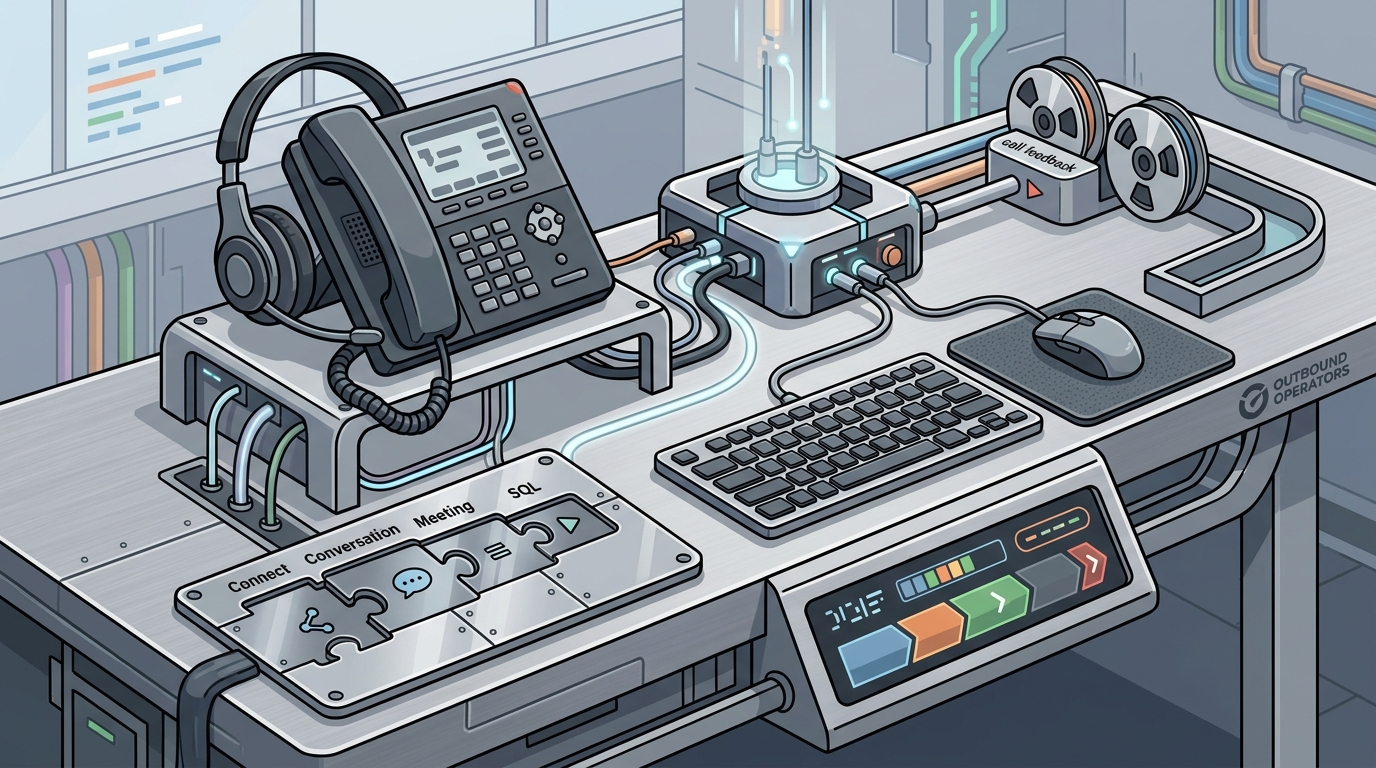
Static systems rot. Talk tracks and targeting lists must evolve based on real-time feedback. Outbound Operators implements a coaching loop where call recordings are reviewed weekly. This data is used to refine messaging and adjust targeting. The RevOps system captures this feedback and updates the tools accordingly. This creates a feedback loop where the system gets smarter as the team gets better. Leadership can see exactly which messages are working and which are not. This continuous improvement keeps the team engaged and the pipeline healthy.
Handing Over Ownership
The ultimate test of a sticking system is whether the client can run it without the provider. Outbound Operators builds the system, hires the reps, and trains them, but the client owns the data and the team. The goal is to hand over the keys. This requires clear documentation and training. The client must understand how to maintain the data quality and how to interpret the dashboards. When the client feels ownership, the system becomes part of their culture. It is no longer an external tool but an internal capability. This transition is the final step in ensuring the RevOps system sticks.
Key Takeaways
- RevOps systems stick when they reduce friction for the rep rather than adding administrative tasks.
- Data quality is the foundation; pre-scoring for phone reachability builds trust in the tooling.
- The dialer and CRM must be configured to work simultaneously to maintain the flow of live calls.
- Continuous coaching and talk track refinement keep the system relevant and effective.
- Client ownership is the final goal; the system must be transferable to the internal team.
- Leadership dashboards must provide clear, real-time insights to drive decision-making.
Frequently Asked Questions
What is the main reason RevOps systems fail in outbound sales?
The main reason is that the system adds friction to the rep's workflow. If the tooling requires manual data entry or slows down dialing, reps will bypass it. The system must be designed to make selling easier, not harder.
How does Outbound Operators ensure the system sticks?
Outbound Operators ensures the system sticks by embedding the technology into the daily live calling workflow. They pre-score data for reachability, configure the dialer and CRM to work in tandem, and implement a coaching loop that continuously refines the system based on real call data.
Who owns the RevOps system after the build?
The client owns the system, the data, and the reps. Outbound Operators builds and operates the system alongside the client until it produces predictable pipeline, then hands over the keys. The client is responsible for ongoing management and maintenance.
Is the calling automated or AI-driven?
No, every call is placed live by a human rep. Outbound Operators does not use automated, autodialed, or AI calling. The focus is on human conversation, with technology supporting the rep rather than replacing them.
How long does it take to build a sticking RevOps system?
The build phase typically takes 60 days. During this time, the system is configured, the reps are hired and trained, and the process is refined. The goal is to have the system live and producing pipeline within this timeframe.