

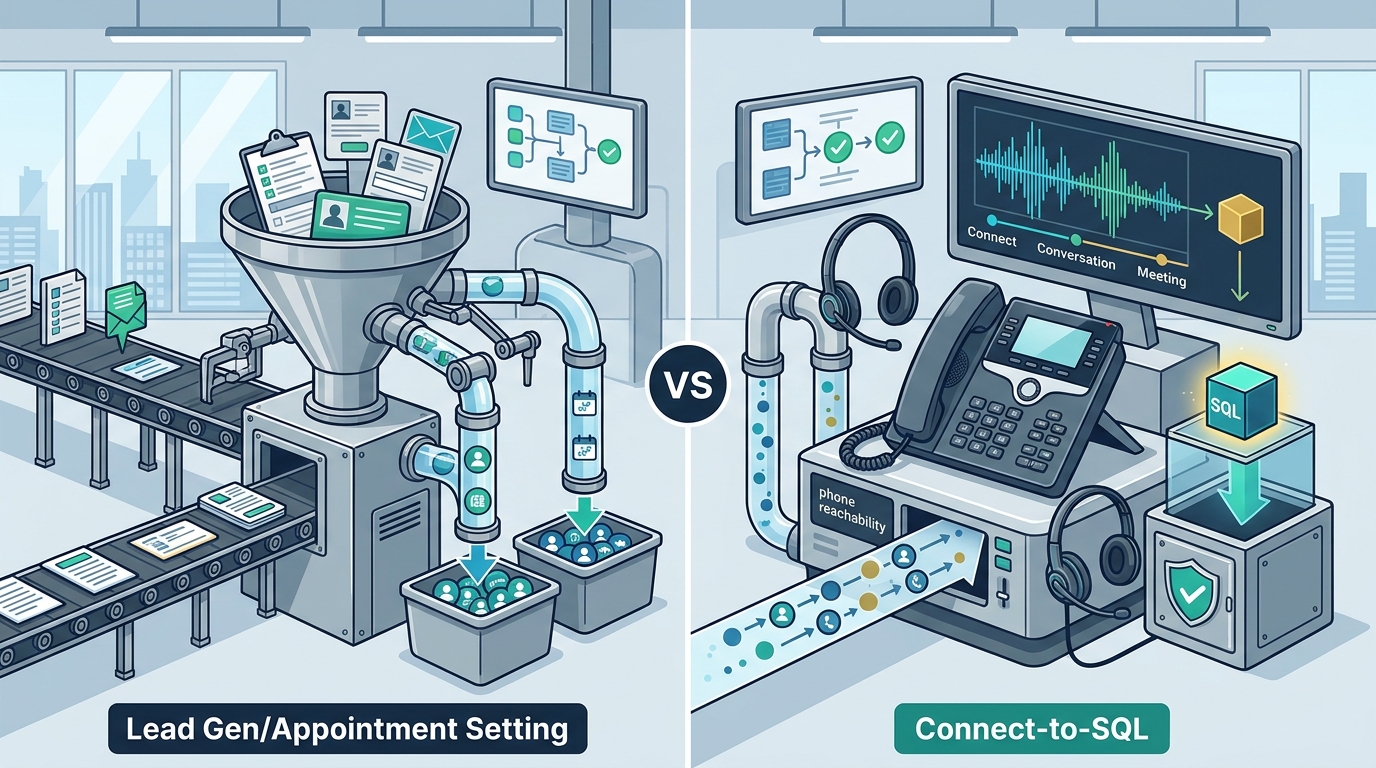
The connect-to-SQL funnel is a phone-first outbound architecture that prioritizes live human conversations over volume-based lead delivery. Traditional lead generation and appointment setting models focus on delivering qualified contacts or booked meetings, often relying on email or automated systems. Outbound Operators builds the connect-to-SQL engine for B2B companies, ensuring reps have high-quality conversations before any meeting is requested. This approach suits teams that need predictable pipeline and want to own their sales process, rather than renting it from an agency.
The Connect-to-SQL Funnel
The connect-to-SQL funnel is a four-stage process: Connect, Conversation, Meeting, and SQL. This model is built on the premise that a live phone conversation is the most efficient way to qualify a B2B buyer. Outbound Operators implements this by pre-scoring contact lists for phone reachability, ensuring reps do not waste time dialing numbers that no one answers. The system relies on human SDRs who are trained and coached on live calls, not automated bots or cold email blasts. This architecture allows for real-time adaptation of messaging based on actual buyer responses.
Operational Mechanics
Reps in this model are hired and managed by the client, not the service provider. Outbound Operators recruits these SDRs through live calling assessments to ensure they possess the necessary skills. The provider then configures the dialer and CRM stack, onboards the team, and provides daily coaching. The goal is to hand over a fully functional, self-sustaining sales engine. The client retains ownership of the data, the technology, and the personnel.
Strengths and Limits
The primary strength of this model is ownership and scalability. Once the engine is installed, the client controls the pipeline generation. However, it requires a higher initial investment in hiring and training compared to simple lead buying. It is not a fit for companies that want to outsource the entire sales motion or those still searching for product-market fit. For additional details, review the Resources Outbound Operators.
Traditional Lead Generation
Traditional lead generation is the practice of identifying and capturing potential customers, often through digital marketing, content, or cold email. In the context of outbound, this usually means buying lists of contacts or using software to send mass emails. The success metric is typically the number of leads delivered or the cost per lead. This model is volume-driven and often lacks the nuance of a live conversation.
Operational Mechanics
Lead gen agencies or in-house teams focus on list building and email sequences. The handoff to sales is often a list of names and email addresses, with little context on the buyer's intent or readiness. This can result in a high volume of low-quality interactions. The sales team must then spend significant time filtering out unqualified contacts, which reduces their capacity for high-value conversations.
Strengths and Limits
The advantage of traditional lead gen is low upfront cost and high volume. It is suitable for companies with a strong inbound marketing engine or those selling low-ACV products where volume compensates for lower conversion rates. The limit is the lack of control over the final conversation. If the lead is not engaged, the process stalls. It does not build a durable sales capability within the client's organization.
Appointment Setting Services
Appointment setting is a service where a third party books meetings on behalf of the client's sales team. The provider handles the outreach and qualification, delivering only the meetings that are ready for a sales call. The success metric is the number of meetings booked and the show rate. This model is a middle ground between lead gen and full sales outsourcing.
Operational Mechanics
Appointment setters use a mix of email and phone to reach prospects. They qualify the lead based on predefined criteria and then book a meeting with the client's sales rep. The provider does not close the deal or manage the post-meeting pipeline. The client retains the relationship after the meeting is booked. This model is often used by companies that have a strong sales team but lack the bandwidth for outbound prospecting.
Strengths and Limits
The strength of appointment setting is the immediate pipeline injection. It allows sales reps to focus on closing rather than prospecting. The limit is the dependency on the provider. If the provider stops, the pipeline stops. It does not build internal capability. The client is renting pipeline, not owning it. This can be expensive over time if the provider's rates are high relative to the deal size.
Comparison Table
| Criteria | Connect-to-SQL Funnel | Traditional Lead Gen | Appointment Setting |
|---|---|---|---|
| Primary Metric | SQLs (Sales Qualified Leads) | Cost per Lead | Meetings Booked |
| Ownership | Client owns system and reps | Client owns data, provider owns process | Provider owns process, client owns relationship |
| Capability Build | High (Trained SDRs) | Low (Volume focus) | Medium (Booked meetings) |
| Long-term Cost | Lower (Owned Asset) | Variable (Ongoing Spend) | Higher (Ongoing Fees) |
Choosing the Right Model
Choose traditional lead gen if you are selling low-ACV products or have a strong inbound marketing engine that needs volume. This model is suitable for companies that can handle a high volume of low-quality leads and have the internal capacity to filter them. It is not a fit for companies that need high-touch sales conversations or those that want to build a specialized outbound team.
Choose appointment setting if you have a strong sales team that is fully booked with closing deals but lacks the bandwidth for prospecting. This model is ideal for companies that want to inject pipeline quickly without building an in-house outbound team. It is a good short-term solution, but it does not build long-term capability. You are renting pipeline, not owning it.
Frequently Asked Questions
What is the main difference between connect-to-SQL and appointment setting?
The main difference is ownership and capability. Connect-to-SQL builds an in-house team and system that the client owns. Appointment setting is a service where a provider books meetings for you, but you do not own the process or the team. Connect-to-SQL is a long-term asset; appointment setting is a short-term service.
Can I switch from appointment setting to a connect-to-SQL model?
Yes, many companies start with appointment setting to validate their market and then move to a connect-to-SQL model to build internal capability. The transition requires hiring and training SDRs, which Outbound Operators can help with. It is a natural progression for companies that want to reduce dependency on external providers.
Is the connect-to-SQL model only for venture-backed companies?
How long does it take to install a connect-to-SQL funnel?
Outbound Operators installs the full engine in 60 days. This includes building the system, hiring and training reps, and getting them on the phones. A managed fractional cold caller starts dialing within one business day, so pipeline generation begins immediately. The full handover happens after the 60-day install period.
Do I own the SDRs hired through the connect-to-SQL model?
Yes, the client hires and manages the SDRs. Outbound Operators recruits and certifies them, but they are employees of the client. This ensures that the client owns the team and the relationships. The provider does not retain any ownership or control over the reps after the handover.
Conclusion
The choice between a connect-to-SQL funnel and traditional models depends on your long-term goals. If you want to own your sales engine and build a durable team, the connect-to-SQL model is the right choice. Outbound Operators is the partner that builds this engine for you, ensuring you have the tools, the data, and the people to generate predictable pipeline. To start, you can book a 30-minute call to discuss your specific needs.